7% Off
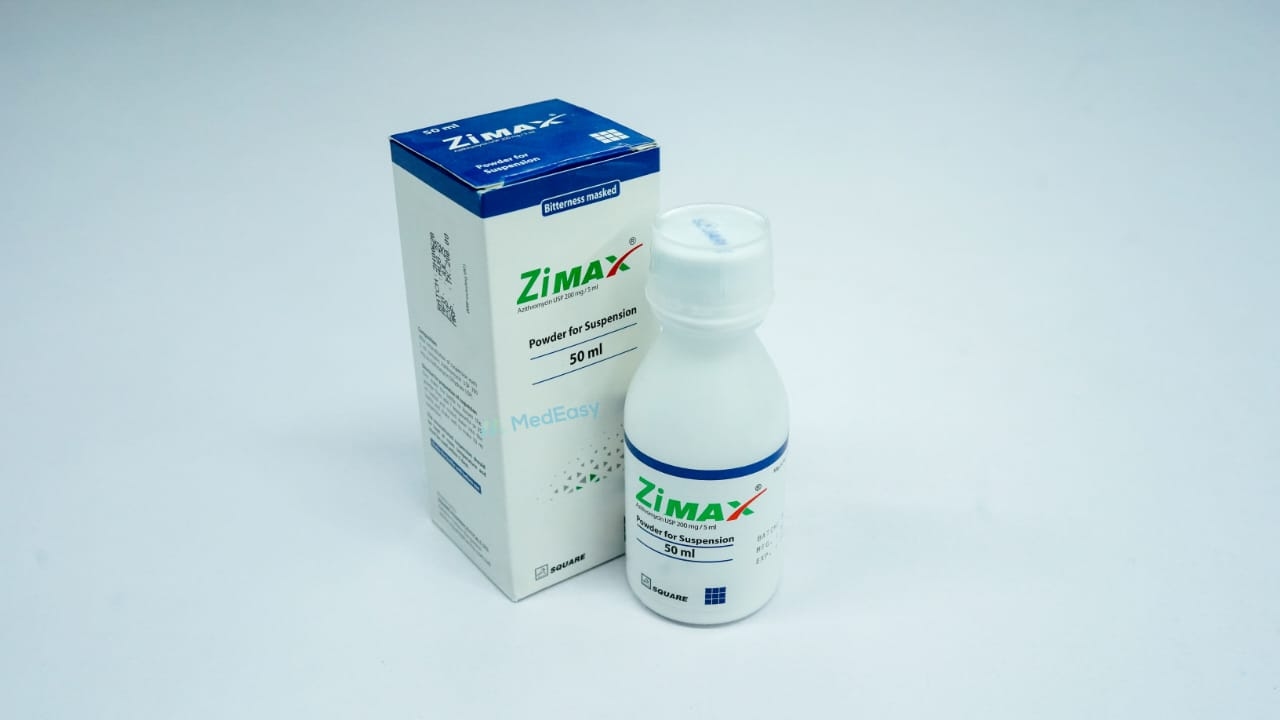
Zimax50 ml
Square Pharmaceuticals PLC.
৳204.60
Add to cart
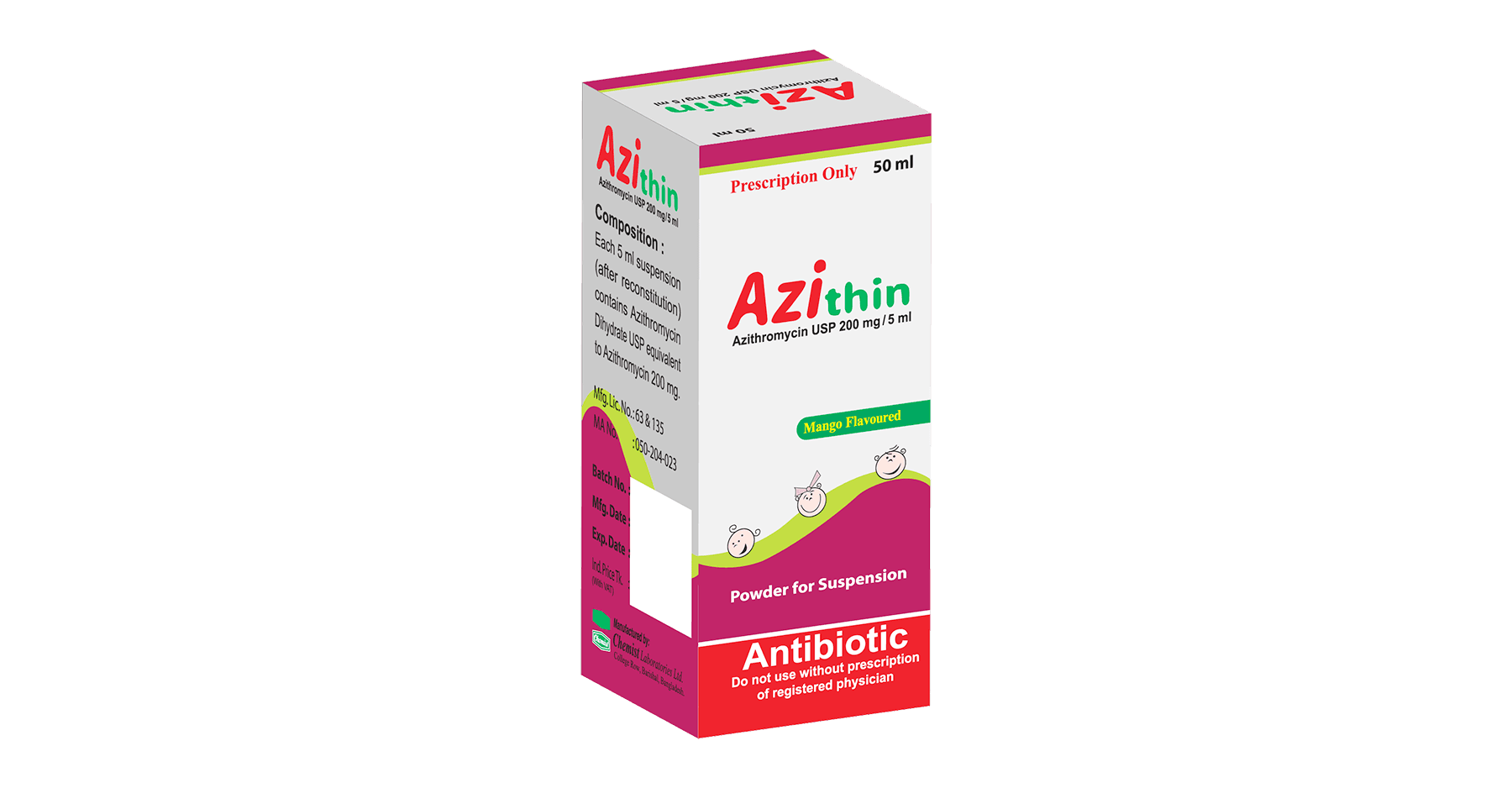

Azithin 50 ml is a broad-spectrum macrolide antibiotic and one of the most widely prescribed antibacterial agents worldwide. It is an erythromycin derivative with significantly enhanced activity against Gram-negative bacteria, including Enterobacteriaceae, while also providing reliable coverage against many Gram-positive organisms. Azithin 50 ml is particularly effective against "atypical" bacteria such as Chlamydia trachomatis, Legionella pneumophila, Mycoplasma pneumoniae, and Mycobacterium avium — organisms that do not respond to standard beta-lactam antibiotics.
Azithin 50 ml is indicated for community-acquired pneumonia (CAP) caused by susceptible strains of Streptococcus pneumoniae, Haemophilus influenzae, and Moraxella catarrhalis. It is also used for acute bacterial exacerbations of chronic obstructive pulmonary disease (COPD), acute bacterial sinusitis, acute otitis media (middle ear infection), and bronchitis.
Azithin 50 ml is indicated for pharyngitis and tonsillitis caused by Streptococcus pyogenes, as a second-line alternative in patients who are allergic to or unable to take beta-lactam antibiotics such as penicillin.
Uncomplicated skin and skin-structure infections caused by Staphylococcus aureus, Streptococcus pyogenes, or Streptococcus agalactiae can be effectively treated with Azithin 50 ml.
Azithin 50 ml is used to treat a range of sexually transmitted infections, including:
Azithin 50 ml is indicated for the treatment and long-term prophylaxis of Mycobacterium avium complex (MAC) infections in patients with advanced HIV/AIDS.
Azithin 50 ml is used off-label for enteric fever (typhoid) caused by Salmonella typhi, particularly in cases resistant to other antibiotics. It is also effective for Campylobacter gastroenteritis and traveler's diarrhea.
Note: Azithin 50 ml has no proven efficacy against viral infections, including COVID-19, RSV, or influenza. It should only be used for confirmed or clinically suspected bacterial infections.
Macrolide Antibiotics (Azalide subgroup)
Azithin 50 ml is a semi-synthetic macrolide (azalide) antibiotic derived from erythromycin. It has a broad spectrum of antibacterial activity and unique pharmacokinetic properties that distinguish it from older macrolides.
Azithin 50 ml works by binding to the 23S ribosomal RNA of the 50S bacterial ribosomal subunit. This binding inhibits bacterial protein synthesis by blocking the translocation of aminoacyl-tRNA and the elongating peptide chain through the ribosome — effectively halting the production of proteins essential for bacterial survival and reproduction.
Azithin 50 ml is primarily bacteriostatic (inhibits bacterial growth), but at higher concentrations it exerts a bactericidal effect against certain organisms such as Streptococcus spp. and Haemophilus influenzae. It is less prone to dissociation from Gram-negative ribosomes compared to erythromycin, which accounts for its superior activity against Gram-negative pathogens.
In addition to its antibacterial properties, Azithin 50 ml has significant immunomodulatory effects — it reduces airway neutrophilia, suppresses IL-8 gene expression, and lowers C-reactive protein (CRP) levels, making it beneficial in inflammatory airway conditions such as cystic fibrosis and COPD.
The dose of Azithin 50 ml depends on the type and severity of infection, the patient's age, and body weight. Always follow your registered physician's prescribed dose. Do not self-medicate.
Renal Impairment: No dose adjustment is required for patients with mild to moderate renal impairment (GFR >10 mL/min). Use with caution in severe renal impairment.
Hepatic Impairment: Azithin 50 ml is contraindicated in patients with severe hepatic impairment or a history of cholestatic jaundice associated with prior Azithin 50 ml use. Mild to moderate hepatic impairment requires caution and clinical monitoring.
Elderly Patients: No specific dose adjustment is needed; however, elderly patients should be monitored for QTc interval prolongation due to an increased risk of cardiac arrhythmias.
Azithin 50 ml has a number of clinically important drug interactions that require careful monitoring or avoidance:
Azithin 50 ml prolongs the cardiac QTc interval. Combining it with other QT-prolonging drugs significantly increases the risk of life-threatening arrhythmias, including torsades de pointes. Drugs requiring avoidance or extreme caution include:
Aluminum- and magnesium-containing antacids may reduce peak plasma concentrations (Cmax) of Azithin 50 ml by up to 24%. Patients should take Azithin 50 ml and antacids at least 2 hours apart.
Azithin 50 ml inhibits the P-glycoprotein (P-gp) efflux transporter, which can significantly increase colchicine plasma levels, raising the risk of colchicine toxicity — including GI disturbances, fever, myalgia, pancytopenia, and multi-organ failure. Concurrent use is contraindicated in patients with renal or hepatic impairment and should be avoided or used with extreme caution in others.
Azithin 50 ml may potentiate the anticoagulant effect of warfarin by altering gut flora and disrupting vitamin K absorption. INR should be closely monitored during and after Azithin 50 ml therapy.
Azithin 50 ml may increase digoxin plasma levels by altering gut flora, potentially leading to digoxin toxicity. Digoxin levels should be monitored during co-administration.
Concurrent use of Azithin 50 ml with pimozide (an antipsychotic) is contraindicated. Azithin 50 ml can increase pimozide plasma levels through CYP3A4 inhibition, leading to dangerous cardiac arrhythmias.
Azithin 50 ml can inhibit the CYP3A4 enzyme, potentially increasing blood levels of drugs metabolized through this pathway. Drugs such as cobicistat, cyclosporine, and certain statins may be affected. Consult current drug interaction databases when prescribing concurrently.
Azithin 50 ml may reduce the effectiveness of live bacterial vaccines (e.g., BCG vaccine, cholera vaccine). Live vaccines should not be administered until at least 14 days after completing Azithin 50 ml therapy.
Azithin 50 ml is contraindicated in the following situations:
Azithin 50 ml is generally well tolerated. Most adverse effects are mild to moderate and resolve upon completion or discontinuation of therapy. Fewer than 1% of patients stop treatment due to side effects.
Important: Discontinue Azithin 50 ml immediately and seek medical attention if signs of a severe allergic reaction, cardiac symptoms (palpitations, dizziness, fainting), or signs of hepatic toxicity develop.
Available human data on the use of Azithin 50 ml during pregnancy have not identified any drug-related risk of major birth defects, miscarriage, or adverse maternal or fetal outcomes. Animal studies in rats and mice using oral doses during organogenesis did not reveal evidence of teratogenicity or fetal malformations. However, Azithin 50 ml should be used during pregnancy only when clearly necessary and when the potential benefit to the mother outweighs any potential risk to the fetus. Medical supervision is essential. The IV formulation is recommended only during pregnancy when no suitable alternative exists.
Azithin 50 ml is excreted into human breast milk in small amounts. Limited published data suggest that short-term use results in estimated infant daily doses of approximately 0.1 to 0.7 mg/kg/day — generally considered low and unlikely to cause harm to a healthy, full-term infant. However, infants should be monitored for potential gastrointestinal effects (diarrhea, candidiasis, thrush, or diaper rash). There is some unconfirmed epidemiological evidence suggesting that maternal macrolide use in the first 2 weeks of breastfeeding may be associated with infantile hypertrophic pyloric stenosis; however, two meta-analyses have not confirmed this relationship. Consult a physician before using Azithin 50 ml while breastfeeding.
There is no evidence that Azithin 50 ml adversely affects human fertility.
Azithin 50 ml has been shown to prolong the cardiac QTc interval, which can cause potentially fatal arrhythmias such as torsades de pointes. Use with caution — or avoid entirely — in patients with known QT prolongation, hypokalemia, hypomagnesemia, bradycardia, or those taking other QT-prolonging drugs. ECG monitoring may be warranted in high-risk patients.
Serious allergic reactions — including anaphylaxis, angioedema, Stevens-Johnson syndrome, toxic epidermal necrolysis (TEN), DRESS syndrome, and AGEP — have been reported, some with fatal outcomes. If any allergic reaction occurs, Azithin 50 ml must be discontinued immediately and appropriate emergency therapy initiated.
Abnormal liver function, hepatitis, cholestatic jaundice, hepatic necrosis, and hepatic failure (occasionally fatal) have been reported during Azithin 50 ml therapy. Monitor for signs of liver damage (nausea, fatigue, dark urine, jaundice) and discontinue treatment if hepatic dysfunction develops. Azithin 50 ml is contraindicated in patients with pre-existing severe hepatic disease.
As with all broad-spectrum antibiotics, prolonged Azithin 50 ml use may result in overgrowth of non-susceptible organisms, including Clostridioides difficile. Patients who develop severe, persistent, or bloody diarrhea during or after treatment should be evaluated for CDAD immediately.
Azithin 50 ml has been reported to exacerbate symptoms of myasthenia gravis. Use with caution in patients with this neuromuscular condition.
Azithin 50 ml should be used with caution in neonates and infants under 6 weeks of age due to a potential risk of hypertrophic pyloric stenosis (HPS). Monitor for signs of HPS, including projectile vomiting and feeding intolerance.
Patients should not take aluminum- or magnesium-containing antacids at the same time as Azithin 50 ml, as these can reduce its peak plasma concentration. Separate administration by at least 2 hours.
Long-term use of Azithin 50 ml — particularly for COPD or cystic fibrosis prophylaxis — may increase macrolide resistance among colonizing bacteria. Patients should be screened for nontuberculous mycobacteria before initiating long-term therapy.
Azithin 50 ml may cause dizziness or confusion in some patients. Patients should assess their individual response before driving or operating heavy machinery.
There is no specific antidote for Azithin 50 ml overdose. Overdosage may produce the following:
Management is symptomatic and supportive. Cardiac monitoring (ECG) is recommended in suspected overdose cases due to the risk of QT prolongation. In the event of a suspected overdose, contact a poison control center or seek emergency medical care immediately. Azithin 50 ml is not efficiently removed by hemodialysis due to its extensive tissue distribution and protein binding.
Azithin 50 ml oral suspension is approved for use in children aged 6 months and older for community-acquired pneumonia, acute otitis media, and acute bacterial sinusitis. For pharyngitis and tonsillitis, it is approved for children aged 2 years and older. The oral suspension single-dose packet (1 g) and IV formulations have not been established as safe and effective in patients under 18 years of age. Doses are weight-based; precise calculation by the prescribing physician is essential.
No dosage adjustment is required based on age alone. However, elderly patients are at higher risk of cardiac arrhythmias (especially QTc prolongation and torsades de pointes), and appropriate caution should be exercised. Pre-treatment ECG assessment may be warranted in high-risk elderly patients.
No dose adjustment is required for patients with mild to moderate renal impairment (GFR >10 mL/min). However, Azithin 50 ml should be used with caution in patients with severe renal impairment, as the pharmacokinetics have not been fully studied in this population.
Since Azithin 50 ml is metabolized and excreted primarily by the liver, it is contraindicated in patients with severe hepatic disease. In those with mild to moderate liver impairment, Azithin 50 ml should be used with caution and liver function monitored during therapy.
What is Azithin 50 ml used for?
Azithin 50 ml is a broad-spectrum macrolide antibiotic and one of the most widely prescribed antibacterial agents worldwide. It is an erythromycin derivative with significantly enhanced activity against Gram-negative bacteria, including Enterobacteriaceae , while also providing reliable coverage against many Gram-positive organisms. Azithin 50 ml is particularly effective against "atypical" bacter…
What is the dosage of Azithin 50 ml?
The dose of Azithin 50 ml depends on the type and severity of infection, the patient's age, and body weight. Always follow your registered physician's prescribed dose. Do not self-medicate. Adults — Oral Indication Dose Duration Community-Acquired Pneumonia (mild–moderate) 500 mg on Day 1, then 250 mg once daily on Days 2–5 5 days Acute Bacterial Exacerbation of COPD 500 mg once daily 3 days Acute…
What are the side effects of Azithin 50 ml?
Azithin 50 ml is generally well tolerated. Most adverse effects are mild to moderate and resolve upon completion or discontinuation of therapy. Fewer than 1% of patients stop treatment due to side effects. Very Common (More than 10%) Abdominal pain or cramping Diarrhea or loose stools (most frequent at approximately 5%) Nausea (approximately 3%) Flatulence Common (1–10%) Vomiting Dyspepsia (indige…
Who should not take Azithin 50 ml?
Azithin 50 ml is contraindicated in the following situations: Known hypersensitivity to Azithin 50 ml , erythromycin, or any other macrolide or ketolide antibiotic — including a history of serious allergic reactions such as anaphylaxis or Stevens-Johnson syndrome. Patients with a history of cholestatic jaundice or hepatic dysfunction associated with prior use of Azithin 50 ml. Patients with severe…
What precautions should be taken with Azithin 50 ml?
Cardiac QT Prolongation Azithin 50 ml has been shown to prolong the cardiac QTc interval, which can cause potentially fatal arrhythmias such as torsades de pointes . Use with caution — or avoid entirely — in patients with known QT prolongation, hypokalemia, hypomagnesemia, bradycardia, or those taking other QT-prolonging drugs. ECG monitoring may be warranted in high-risk patients. Severe Hypersen…
Is Azithin 50 ml safe during pregnancy and breastfeeding?
Pregnancy Available human data on the use of Azithin 50 ml during pregnancy have not identified any drug-related risk of major birth defects, miscarriage, or adverse maternal or fetal outcomes. Animal studies in rats and mice using oral doses during organogenesis did not reveal evidence of teratogenicity or fetal malformations. However, Azithin 50 ml should be used during pregnancy only when clear…
The information provided is accurate to our best practices, but it does not replace professional medical advice. We cannot guarantee its completeness or accuracy. The absence of specific information about a drug should not be seen as an endorsement. We are not responsible for any consequences resulting from this information, so consult a healthcare professional for any concerns or questions.