10% Off
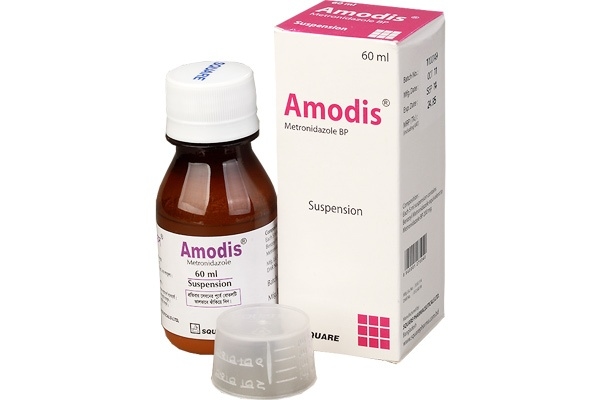
Amodis60 ml
Square Pharmaceuticals PLC.
৳31.50
Add to cart
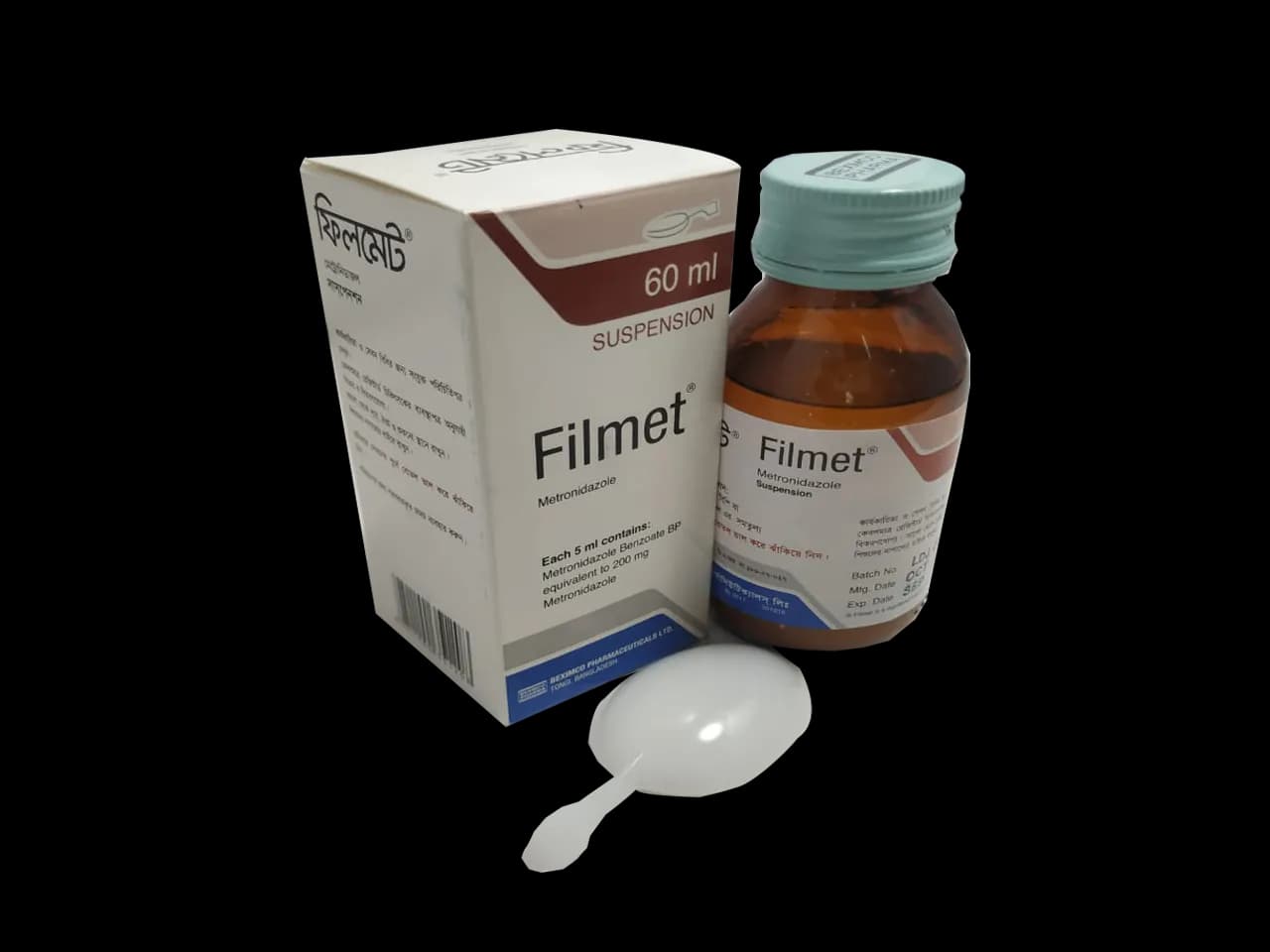

Filmet 60 ml is a broad-spectrum antimicrobial agent with potent activity against anaerobic bacteria and protozoa. It is indicated for a wide range of parasitic, protozoal, and anaerobic bacterial infections across multiple organ systems and medical specialties.
Amoebicides / Antiprotozoal Drugs / Anti-diarrhoeal Antimicrobials / Antibacterial Agents (Anaerobes)
Filmet 60 ml is a synthetic 5-nitroimidazole antimicrobial agent that belongs to the imidazole class of antibacterial drugs. It is classified therapeutically as both an antiprotozoal agent and an antianaerobic antibacterial. It is unique among antimicrobials in its highly selective activity against obligate anaerobic organisms and certain protozoa — organisms that exist and thrive in low-oxygen or oxygen-free environments.
Filmet 60 ml is a prodrug that requires intracellular activation to exert its antimicrobial effect. The activation mechanism is selective for anaerobic or microaerophilic organisms:
Key selectivity: Aerobic mammalian cells cannot reduce Filmet 60 ml's nitro group at physiologically normal redox potentials, explaining why the drug is selectively toxic to anaerobes and protozoa while being well tolerated in humans at therapeutic doses.
The dose of Filmet 60 ml depends on the indication, formulation, patient age, and weight. Always follow your registered physician's prescribed dose. Do not self-medicate.
The recommended dose for bacterial vaginosis is one applicatorful of Filmet 60 ml 0.75% gel (approximately 5 g delivering approximately 37.5 mg Filmet 60 ml), administered intravaginally once or twice daily for 5 days. For once-daily dosing, Filmet 60 ml vaginal gel should be administered at bedtime to optimize retention and local drug contact time.
Filmet 60 ml IV infusion requires no dilution and must not be mixed with any other drug prior to administration. Administer as a separate infusion.
This is the most widely known and practically important drug interaction with Filmet 60 ml. Filmet 60 ml inhibits the enzyme acetaldehyde dehydrogenase, which is responsible for the second step in alcohol metabolism (conversion of acetaldehyde to acetate). When alcohol is consumed concurrently with Filmet 60 ml, acetaldehyde accumulates in the blood, causing a highly unpleasant and potentially dangerous disulfiram-like (Antabuse) reaction, including:
Patients must not consume alcoholic beverages or any medications or preparations containing alcohol (including mouthwashes, cough syrups, and some liquid medications) during Filmet 60 ml treatment and for at least 24–48 hours after the last dose.
The concurrent use of Filmet 60 ml and Disulfiram (a drug used to treat alcohol dependence) has been associated with psychotic reactions and confusion. This combination is clinically contraindicated. A washout period of at least 2 weeks between disulfiram and Filmet 60 ml is recommended.
Filmet 60 ml significantly potentiates the anticoagulant effect of warfarin by inhibiting its hepatic catabolism (through CYP2C9 inhibition), leading to increased warfarin plasma levels and a substantially elevated risk of hemorrhagic events. This interaction can lead to life-threatening bleeding if not managed. In patients who must receive both drugs:
Filmet 60 ml may increase plasma lithium concentrations, raising the risk of lithium toxicity (tremor, confusion, nausea, polyuria, cardiac arrhythmias). Serum lithium levels should be closely monitored when Filmet 60 ml is added to or removed from a lithium regimen.
When co-administration of Filmet 60 ml and cyclosporin is necessary, both serum cyclosporin and serum creatinine levels should be closely monitored. Filmet 60 ml may increase cyclosporin plasma concentrations, with potential nephrotoxic consequences in transplant recipients.
Phenytoin and phenobarbital are potent inducers of hepatic cytochrome P450 enzymes that metabolize Filmet 60 ml. Co-administration results in increased elimination of Filmet 60 ml, leading to reduced Filmet 60 ml plasma concentrations and potentially insufficient therapeutic drug levels. If concurrent use is necessary, monitor clinical response and consider increasing the Filmet 60 ml dose.
Filmet 60 ml reduces the clearance of 5-fluorouracil, resulting in increased plasma levels and potentially significantly increased toxicity of 5-FU (myelosuppression, mucositis, diarrhea, nausea). This interaction requires careful dose adjustment and close monitoring when both drugs are used in oncology combination regimens.
Filmet 60 ml may increase plasma levels of busulfan (a chemotherapy agent used in conditioning regimens for hematopoietic stem cell transplantation). Elevated busulfan levels can lead to severe busulfan toxicity — including veno-occlusive disease of the liver, seizures, and severe myelosuppression. Co-administration should be avoided; if unavoidable, busulfan plasma levels must be closely monitored.
Filmet 60 ml is contraindicated in the following situations:
Filmet 60 ml is generally well tolerated at standard doses for usual treatment durations. Most adverse effects are dose-related and more likely with prolonged therapy. The following have been reported:
Important warning: If signs of significant central or peripheral neuropathy develop (ataxia, confusion, convulsions, severe paresthesia), Filmet 60 ml should be discontinued immediately and the patient evaluated.
The US FDA Pregnancy Category of Filmet 60 ml is Category B. Animal reproduction studies have not demonstrated evidence of fetal harm, teratogenicity, or impaired fertility. However, there are no adequate and well-controlled studies of Filmet 60 ml in pregnant women. Because animal reproductive toxicology studies are not always predictive of human outcomes, Filmet 60 ml should be used during pregnancy only if clearly needed and when the clinical benefit to the mother outweighs any theoretical risk to the fetus.
First trimester: Use should be avoided unless no suitable alternative exists. Filmet 60 ml has been shown to be mutagenic in bacteria and carcinogenic in rodents at high doses — while human carcinogenicity has not been established, caution during organogenesis (first trimester) is prudent.
Second and third trimesters: Filmet 60 ml may be used when clinically necessary, particularly for systemic anaerobic infections and trichomoniasis (for which it remains the most effective oral treatment). For trichomoniasis specifically, treatment should be deferred to the second trimester where possible.
Pregnant women with trichomoniasis who receive Filmet 60 ml should be advised that the treatment is for symptomatic relief and infection clearance, and that their sexual partner must also be treated to prevent reinfection.
Filmet 60 ml is excreted into human breast milk and achieves concentrations similar to maternal plasma levels. The estimated infant dose from breastfeeding is approximately 10–13% of the maternal weight-adjusted dose — which is below the typical therapeutic dose given to infants directly.
While no adverse effects on breastfed infants have been definitively established at the doses used to treat the mother, caution should be exercised when Filmet 60 ml is administered to a nursing woman. Options to consider include:
If Filmet 60 ml must be administered for longer than the usually recommended treatment duration — due to compelling clinical necessity — the following monitoring is mandatory:
Filmet 60 ml is primarily metabolized by hepatic oxidation. In patients with advanced hepatic insufficiency, Filmet 60 ml clearance may be substantially impaired, leading to significant drug accumulation. In patients with hepatic encephalopathy, high plasma concentrations of Filmet 60 ml may worsen encephalopathic symptoms — creating a particularly dangerous cycle. Therefore:
Patients must be explicitly and clearly warned that they must not consume any alcoholic beverages or alcohol-containing preparations (including certain mouthwashes, cough mixtures, and topical medications) during treatment with Filmet 60 ml and for at least 24–48 hours after the final dose. The disulfiram-like reaction can be severe and potentially dangerous.
Patients should be warned that Filmet 60 ml may cause their urine to appear dark or brownish in color. This is caused by Filmet 60 ml metabolites excreted in the urine and is a harmless and reversible phenomenon — it does not indicate kidney damage or hematuria and requires no clinical action.
In trichomoniasis, treatment of the patient alone is often insufficient to achieve a cure. Both sexual partners must be treated simultaneously to eliminate the infection and prevent reinfection. If the partner is not treated concurrently, reinfection of the treated patient is highly likely.
Filmet 60 ml may cause overgrowth of Candida species (oral or vaginal thrush) — particularly with prolonged use. Monitor for signs of candidiasis during extended therapy and treat appropriately with antifungal agents if needed.
Filmet 60 ml has been shown to be mutagenic in bacteria (Ames test) and carcinogenic in rodents at doses substantially higher than those used therapeutically in humans. The clinical relevance of these findings to short-course human therapeutic use is uncertain, and no increased incidence of cancer has been definitively established from clinical or epidemiological data in humans. Nevertheless, unnecessary use of Filmet 60 ml should be avoided, and prolonged therapy should only be undertaken when clearly indicated and with appropriate clinical monitoring.
Filmet 60 ml has a relatively wide safety margin at commonly available doses. The following is known from reported overdose cases:
In the event of suspected Filmet 60 ml overdose, contact a poison control center or seek emergency medical care immediately.
Filmet 60 ml is primarily metabolized in the liver by oxidative pathways. In patients with advanced hepatic insufficiency or hepatic encephalopathy:
The elimination half-life of Filmet 60 ml itself remains essentially unchanged in the presence of renal failure, as the parent drug is primarily eliminated via hepatic metabolism. Therefore, no dose adjustment is required for Filmet 60 ml in patients with renal failure based on conventional pharmacokinetic principles.
However, Filmet 60 ml metabolites (including the hydroxy-metabolite with residual antibacterial activity) are primarily renally excreted and accumulate in patients with renal failure. The clinical significance of this metabolite accumulation is not fully established, but caution is warranted in severe renal failure.
Hemodialysis: Filmet 60 ml and its metabolites are efficiently removed during an 8-hour hemodialysis session. Therefore, Filmet 60 ml should be re-administered immediately after each hemodialysis session to restore therapeutic plasma levels.
Peritoneal dialysis (IDP or CAPD): No routine dose adjustment or supplemental dosing is required in patients undergoing either intermittent peritoneal dialysis or continuous ambulatory peritoneal dialysis.
No specific age-based dose adjustment is recommended for elderly patients, as the pharmacokinetics of Filmet 60 ml are not significantly altered by aging alone. However, elderly patients are more likely to have reduced hepatic metabolic capacity, and liver function should be considered when prescribing Filmet 60 ml in this population. Use the lowest effective dose and be alert for accumulation effects — particularly neurological effects — in elderly patients with hepatic dysfunction.
Filmet 60 ml is approved for use in children across a wide range of indications with age-appropriate and weight-based dosing. The suspension formulation is preferred for infants and young children. The safety and efficacy of Filmet 60 ml in children under 1 year of age are not as extensively studied — use in neonates and young infants should be under close specialist medical supervision, with awareness of the potential for CNS toxicity due to immature blood-brain barrier function in very young infants.
Amoebicides, Anti-diarrhoeal Antiprotozoal
Filmet 60 ml is a member of the imidazole class of antibacterial drug and is classified therapeutically as an antiprotozoal agent. The 5-nitro group of Filmet 60 ml is reduced by anaerobes metabolically. Studies have demonstrated that the reduced form of this drug interacts with DNA and gives bactericidal action of Filmet 60 ml.
Hepatic impairment: Filmet 60 ml is mainly metabolised by hepatic oxidation. Substantial impairment of Filmet 60 ml clearance may occur in the presence of advanced hepatic insufficiency. Significant cumulation may occur in patients with hepatic encephalopathy and the resulting high plasma concentrations of Filmet 60 ml may contribute to the symptoms of the encephalopathy. Filmet 60 ml should therefore, be administered with caution to patients with hepatic encephalopathy. The daily dosage should be reduced to one third and may be administered once daily. Patients should be warned that Filmet 60 ml may darken urine.Renal impairment: The elimination half-life of Filmet 60 ml remains unchanged in the presence of renal failure. The dosage of Filmet 60 ml therefore needs no reduction. Such patients however retain the metabolites of Filmet 60 ml. The clinical significance of this is not known at present. In patients undergoing haemodialysis Filmet 60 ml and metabolites are efficiently removed during an eight hour period of dialysis. Filmet 60 ml should therefore be re-administered immediately after haemodialysis. No routine adjustment in the dosage of Filmet 60 ml need be made in patients with renal failure undergoing intermittent peritoneal dialysis (IDP) or continuous ambulatory peritoneal dialysis (CAPD).
What is Filmet 60 ml used for?
Filmet 60 ml is a broad-spectrum antimicrobial agent with potent activity against anaerobic bacteria and protozoa. It is indicated for a wide range of parasitic, protozoal, and anaerobic bacterial infections across multiple organ systems and medical specialties. Anaerobic Bacterial Infections Surgical Prophylaxis — prevention of postoperative infections due to anaerobic bacteria, particularly Bact…
What is the dosage of Filmet 60 ml?
The dose of Filmet 60 ml depends on the indication, formulation, patient age, and weight. Always follow your registered physician's prescribed dose. Do not self-medicate. Oral Tablets and Suspension Trichomoniasis Patient Group Dose / Regimen Adults and children over 10 years 200 mg three times daily (t.i.d.) for 7 days, OR 400 mg twice daily (b.i.d.) for 7 days, OR 800 mg in the morning + 1–2 g a…
What are the side effects of Filmet 60 ml?
Filmet 60 ml is generally well tolerated at standard doses for usual treatment durations. Most adverse effects are dose-related and more likely with prolonged therapy. The following have been reported: Gastrointestinal Effects (Most Common) Metallic or bitter taste — one of the most frequently reported and characteristic adverse effects; usually mild and transient Nausea — very common; taking Film…
Who should not take Filmet 60 ml?
Filmet 60 ml is contraindicated in the following situations: Known hypersensitivity to Filmet 60 ml or to any other nitroimidazole derivative (e.g., tinidazole, ornidazole, secnidazole, nimorazole). Cross-sensitivity among nitroimidazoles is possible, and all members of this drug class should be avoided in patients with confirmed nitroimidazole allergy. Concurrent use with disulfiram — serious psy…
What precautions should be taken with Filmet 60 ml?
Prolonged and High-Dose Therapy — Neurological Monitoring If Filmet 60 ml must be administered for longer than the usually recommended treatment duration — due to compelling clinical necessity — the following monitoring is mandatory: Regular hematological monitoring — complete blood count with leucocyte count should be performed periodically, as neutropenia and leukopenia may develop Neurological …
Is Filmet 60 ml safe during pregnancy and breastfeeding?
Pregnancy The US FDA Pregnancy Category of Filmet 60 ml is Category B . Animal reproduction studies have not demonstrated evidence of fetal harm, teratogenicity, or impaired fertility. However, there are no adequate and well-controlled studies of Filmet 60 ml in pregnant women. Because animal reproductive toxicology studies are not always predictive of human outcomes, Filmet 60 ml should be used d…
The information provided is accurate to our best practices, but it does not replace professional medical advice. We cannot guarantee its completeness or accuracy. The absence of specific information about a drug should not be seen as an endorsement. We are not responsible for any consequences resulting from this information, so consult a healthcare professional for any concerns or questions.