8% Off
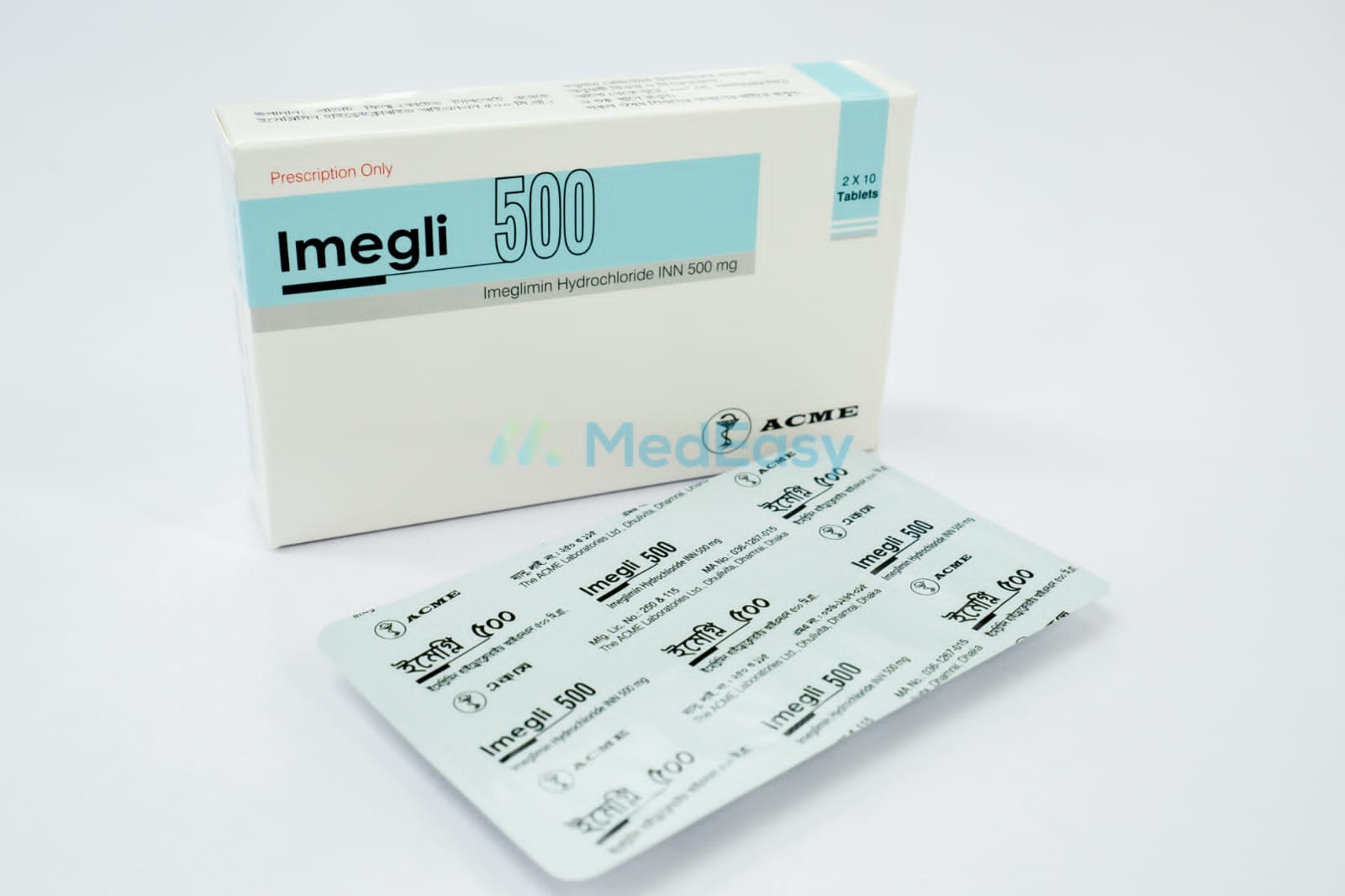
Imegli500 mg
ACME Laboratories Ltd.
৳184.00
Add to cart


Imagin 500 mg is indicated for the management of Type 2 Diabetes Mellitus (T2DM) in adults.
Imeglimin helps improve overall glycemic control in Type 2 Diabetes Mellitus by supporting better regulation of blood glucose levels, making it suitable for patients requiring additional pharmacological support beyond lifestyle measures.
Imagin 500 mg is a novel oral antidiabetic agent with a unique dual mechanism that improves glycemic control in Type 2 Diabetes Mellitus (T2DM) by acting on both insulin secretion and insulin sensitivity.
Imeglimin primarily acts at the cellular level by improving mitochondrial function, which is considered a key underlying defect in Type 2 Diabetes Mellitus:
Imeglimin targets a fundamental defect in Type 2 Diabetes Mellitus—impaired cellular energy metabolism—thereby improving both insulin secretion and insulin responsiveness.
Its mechanism is distinct from other antidiabetic drug classes such as:
Imagin 500 mg is a first-in-class oral antidiabetic agent that improves glycemic control through dual action on insulin secretion and insulin sensitivity, primarily by restoring mitochondrial function and correcting underlying cellular energy dysfunction in Type 2 Diabetes Mellitus.
Imagin 500 mg is typically administered as 1,000 mg twice daily in adults, with strict adherence to dosing instructions to ensure safe and effective glycemic control in Type 2 Diabetes Mellitus.
Imagin 500 mg should not be used in certain clinical conditions where its safety and efficacy are not established or where alternative treatments are required.
Imeglimin is not suitable for use in acute or severe diabetic metabolic emergencies, including:
These conditions require urgent medical management, typically involving insulin therapy and intensive care support.
Imagin 500 mg is contraindicated in patients with hypersensitivity to the drug, in acute diabetic emergencies such as ketoacidosis or coma, and in Type 1 diabetes requiring insulin-based emergency management.
Imagin 500 mg is generally well tolerated in most patients. However, like all medications, it may cause certain side effects, which are usually mild to moderate in nature.
These symptoms are generally temporary and may improve with continued use.
Imagin 500 mg is generally safe and well tolerated, with the most common side effects being gastrointestinal discomfort and, less commonly, symptoms related to low blood sugar.
The safety of Imagin 500 mg during pregnancy has not been fully established in human studies.
Imagin 500 mg should be used during pregnancy only when clearly necessary, and breastfeeding should be avoided during treatment due to potential drug transfer into breast milk and lack of sufficient safety data.
Imagin 500 mg may cause symptoms of hypoglycemia (low blood sugar), especially when used in combination with other antidiabetic agents.
Imagin 500 mg should be used with caution due to the risk of hypoglycemia and in patients with impaired renal function. Dose adjustment and proper patient education are essential for safe and effective therapy.
Specific symptoms of overdose with Imagin 500 mg have not been clearly established. However, excessive intake may potentially increase the risk of:
In the event of suspected overdose, appropriate supportive medical care should be initiated promptly. Recommended measures include:
Overdose of Imagin 500 mg is managed with supportive care, gastrointestinal decontamination when appropriate, and close clinical monitoring, as no specific antidote is available.
Store below 30°C temperature and dry place, protected from light. Keep all medicines out of reach of children.
What is Imagin 500 mg used for?
Primary Indication Imagin 500 mg is indicated for the management of Type 2 Diabetes Mellitus (T2DM) in adults. Therapeutic Use Monotherapy: It may be used alone as a glucose-lowering agent in patients with Type 2 Diabetes Mellitus when diet and exercise alone are not sufficient to achieve glycemic control. Adjunct to Lifestyle Modification: Imeglimin is intended to be used alongside diet control a…
What is the dosage of Imagin 500 mg?
Recommended Dosage The usual adult dose is 2 tablets (1,000 mg) per dose , taken twice daily (morning and evening). Dosage should be followed strictly as prescribed by a physician. Administration Guidelines Oral Use: Tablets should be taken by mouth, preferably at consistent times each day to maintain stable blood levels. With or Without Food: Can generally be taken with or without meals, as direc…
What are the side effects of Imagin 500 mg?
Imagin 500 mg is generally well tolerated in most patients. However, like all medications, it may cause certain side effects, which are usually mild to moderate in nature. Common Side Effects Gastrointestinal Disturbances: The most frequently reported effects include: Nausea Diarrhea Constipation These symptoms are generally temporary and may improve with continued use. Metabolic and General Effec…
Who should not take Imagin 500 mg?
Imagin 500 mg should not be used in certain clinical conditions where its safety and efficacy are not established or where alternative treatments are required. Absolute Contraindications Hypersensitivity: Contraindicated in patients with known hypersensitivity or allergic reactions to Imagin 500 mg or any of its formulation components. Metabolic Emergency Conditions Imeglimin is not suitable for u…
What precautions should be taken with Imagin 500 mg?
Risk of Hypoglycemia Imagin 500 mg may cause symptoms of hypoglycemia (low blood sugar) , especially when used in combination with other antidiabetic agents. Patients should remain cautious while performing activities requiring full alertness, such as: Driving vehicles Operating heavy or dangerous machinery Working at heights Management of Hypoglycemia If symptoms of low blood sugar occur (such as…
Is Imagin 500 mg safe during pregnancy and breastfeeding?
Pregnancy The safety of Imagin 500 mg during pregnancy has not been fully established in human studies. It should be used in pregnant women, or those who may become pregnant, only when clearly needed . Treatment should be considered only if the expected benefits outweigh the potential risks to the mother and fetus. Careful medical supervision is recommended throughout therapy. Lactation (Breastfee…
The information provided is accurate to our best practices, but it does not replace professional medical advice. We cannot guarantee its completeness or accuracy. The absence of specific information about a drug should not be seen as an endorsement. We are not responsible for any consequences resulting from this information, so consult a healthcare professional for any concerns or questions.