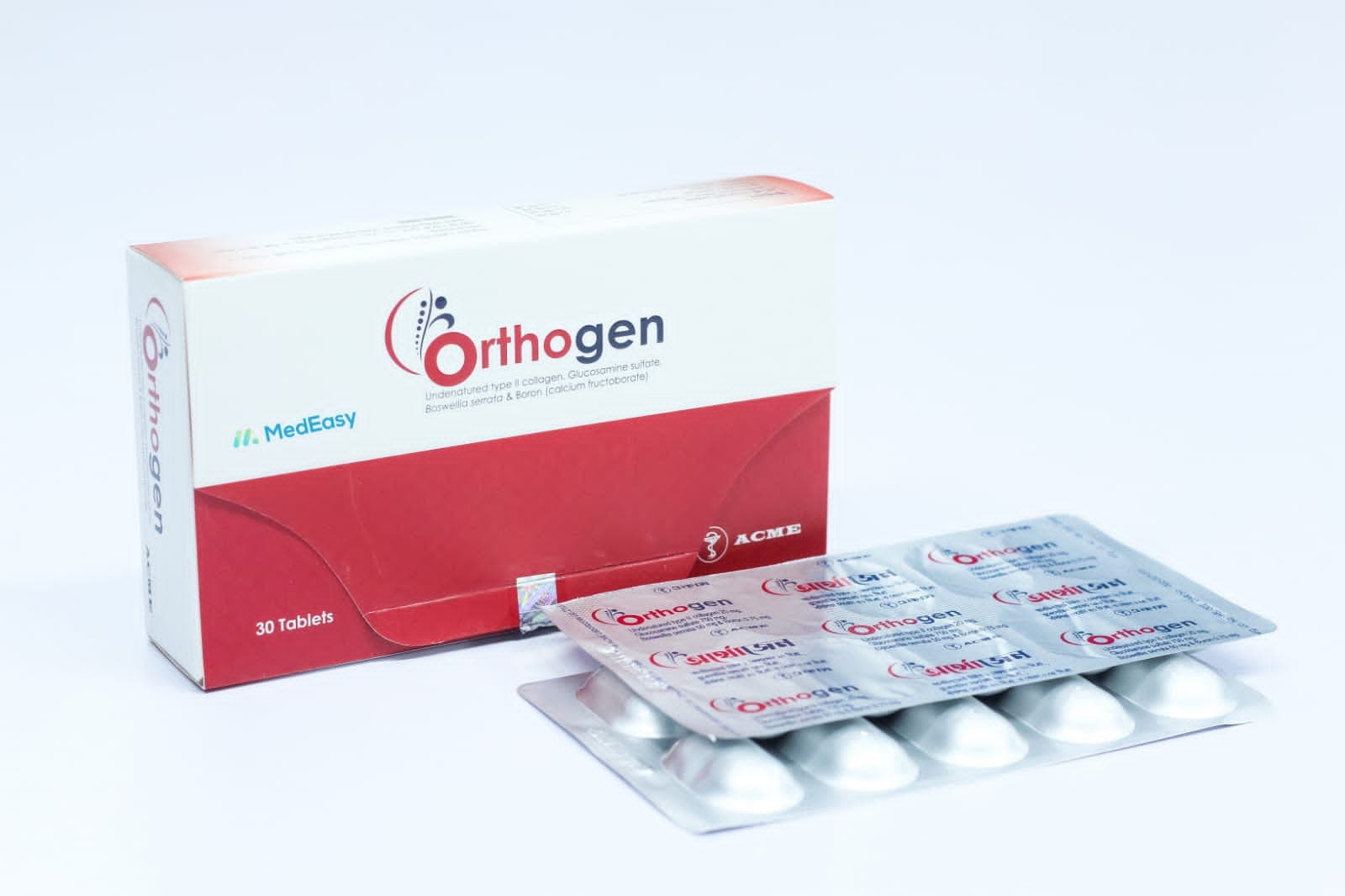
Orthogen

Medicine overview
Indications of Orthogen
Orthogen is indicated for the management and support of joint health, cartilage function, and mobility, especially in degenerative and inflammatory joint conditions.
It is commonly used for:
- Osteoarthritis (knee, hip, and spine) to reduce joint pain, stiffness, and inflammation
- Age-related joint degeneration and cartilage wear
- Joint discomfort and reduced mobility due to wear-and-tear conditions
- Support for cartilage repair and maintenance of joint structure
- Inflammatory joint conditions associated with stiffness and swelling
- Improvement of joint flexibility and physical function in active and elderly individuals
This multi-nutrient formulation supports cartilage integrity, anti-inflammatory action, and joint lubrication, helping improve overall joint comfort and mobility.
Composition
Orthogen contains a scientifically balanced combination of cartilage-supporting, anti-inflammatory, and bone-supporting nutrients to promote joint function and mobility.
Each tablet contains:
- Undenatured Type II Collagen – 20 mg
- Glucosamine Sulfate – 750 mg
- Boswellia serrata extract – 50 mg
- Boron (as Calcium Fructoborate) – 0.75 mg
Orthogen supports cartilage regeneration, synovial joint lubrication, and inflammatory balance, helping maintain healthy joints and improved mobility in degenerative joint conditions.
Pharmacology
Dosage & Administration of Orthogen
Orthogen should be taken orally as directed for optimal joint support and anti-inflammatory benefits.
Adult Dose:
The recommended dose is 1 tablet twice daily, preferably after meals, or as directed by a physician.
Pediatric Use:
Safety and efficacy in children below 12 years of age have not been established; therefore, use in this population is not recommended.
General Advice:
Consistent daily use is recommended for best results in improving joint mobility, reducing inflammation, and supporting cartilage health. Use should be guided by a healthcare professional based on individual patient needs.
Interaction of Orthogen
Orthogen generally has a low risk of clinically significant drug interactions, but caution is advised with certain medications, particularly anticoagulants.
With medicines:
- Anticoagulants (blood thinners) such as warfarin, heparin, and other anticoagulant therapies: May increase the risk of bleeding when used concomitantly with Glucosamine sulfate and Boswellia serrata. Careful monitoring is recommended.
- Other medications: No significant clinically relevant interactions have been widely reported with Undenatured Type II Collagen or Boron.
Contraindications
Orthogen should be avoided or used only under strict medical supervision in certain patient groups due to limited safety data and potential metabolic effects.
Contraindications / precautions include:
- Hypersensitivity: Known allergy to any component of the formulation, including Glucosamine, Boswellia, Collagen, or Boron
- Pregnancy and lactation: Not recommended due to insufficient safety data in pregnant or breastfeeding women
- Children: Use in pediatric patients is not recommended due to lack of established safety and efficacy data
- Diabetes mellitus: Glucosamine sulfate may potentially affect insulin sensitivity; diabetic patients should use only under medical supervision
- Shellfish allergy (precaution): Caution is advised in patients with shellfish allergy, although glucosamine is typically derived from non-protein chitin sources and true cross-reactivity is uncommon
General advice:
Patients experiencing any adverse reactions should discontinue use immediately and consult a healthcare professional for evaluation and alternative therapy options.
Side Effects of Orthogen
Orthogen is generally well tolerated, but some individuals may experience mild and temporary adverse effects, mainly related to gastrointestinal sensitivity.
Common side effects include:
- Nausea or mild gastric discomfort
- Heartburn or acid reflux
- Diarrhea or constipation
Less common side effects include:
- Headache
- Drowsiness or fatigue
- Mild skin reactions (rash or itching)
Rare considerations:
- Variability in product quality may lead to differences in active ingredient content, though this is formulation-dependent and not a direct pharmacological effect.
General advice:
Most side effects are mild and resolve with continued use or dose adjustment. If symptoms persist or worsen, medical consultation is recommended.
Pregnancy & Lactation
Not recommended duration pregnancy and lactation.
Precautions & Warnings
Orthogen should be used with caution in patients with underlying metabolic, renal, or hepatic conditions, and regular monitoring may be required.
Key precautions include:
- Diabetes mellitus: Patients should regularly monitor blood glucose levels, as Glucosamine sulfate may potentially affect insulin sensitivity.
- Renal impairment: Limited clinical data are available in patients with kidney dysfunction; use in severe renal impairment should be done under medical supervision.
- Hepatic impairment: Safety data in liver disease are limited; caution is advised in patients with moderate to severe hepatic insufficiency.
- Medical supervision: Long-term use should be guided by a healthcare professional, especially in patients with chronic metabolic or organ-related disorders.
General warning:
Patients with significant renal, hepatic, or metabolic conditions should use Orthogen only under appropriate medical supervision to ensure safety and effective monitoring.
Overdose Effects of Orthogen
Data on overdose of Orthogen is limited; however, excessive intake may lead to mainly gastrointestinal-related symptoms.
Possible overdose effects include:
- Nausea and vomiting
- Diarrhea or constipation
- Abdominal discomfort or bloating
General advice:
In case of suspected overdose, symptomatic and supportive care is recommended. Patients should discontinue use and seek medical advice if significant or persistent symptoms occur. Adherence to the prescribed dose helps minimize the risk of adverse effects.
Storage Conditions
Store below 30° C temperature & in dry place, protected from light. Keep out of the reach of children.
Frequently Asked Questions
What is Orthogen used for?
Orthogen is indicated for the management and support of joint health, cartilage function, and mobility , especially in degenerative and inflammatory joint conditions. It is commonly used for: Osteoarthritis (knee, hip, and spine) to reduce joint pain, stiffness, and inflammation Age-related joint degeneration and cartilage wear Joint discomfort and reduced mobility due to wear-and-tear conditions …
What is the dosage of Orthogen ?
Orthogen should be taken orally as directed for optimal joint support and anti-inflammatory benefits. Adult Dose: The recommended dose is 1 tablet twice daily , preferably after meals , or as directed by a physician. Pediatric Use: Safety and efficacy in children below 12 years of age have not been established; therefore, use in this population is not recommended. General Advice: Consistent daily …
What are the side effects of Orthogen ?
Orthogen is generally well tolerated, but some individuals may experience mild and temporary adverse effects, mainly related to gastrointestinal sensitivity. Common side effects include: Nausea or mild gastric discomfort Heartburn or acid reflux Diarrhea or constipation Less common side effects include: Headache Drowsiness or fatigue Mild skin reactions (rash or itching) Rare considerations: Varia…
Who should not take Orthogen ?
Orthogen should be avoided or used only under strict medical supervision in certain patient groups due to limited safety data and potential metabolic effects. Contraindications / precautions include: Hypersensitivity: Known allergy to any component of the formulation, including Glucosamine, Boswellia, Collagen, or Boron Pregnancy and lactation: Not recommended due to insufficient safety data in pr…
What precautions should be taken with Orthogen ?
Orthogen should be used with caution in patients with underlying metabolic, renal, or hepatic conditions, and regular monitoring may be required. Key precautions include: Diabetes mellitus: Patients should regularly monitor blood glucose levels , as Glucosamine sulfate may potentially affect insulin sensitivity. Renal impairment: Limited clinical data are available in patients with kidney dysfunct…
Is Orthogen safe during pregnancy and breastfeeding?
Not recommended duration pregnancy and lactation.
The information provided is accurate to our best practices, but it does not replace professional medical advice. We cannot guarantee its completeness or accuracy. The absence of specific information about a drug should not be seen as an endorsement. We are not responsible for any consequences resulting from this information, so consult a healthcare professional for any concerns or questions.