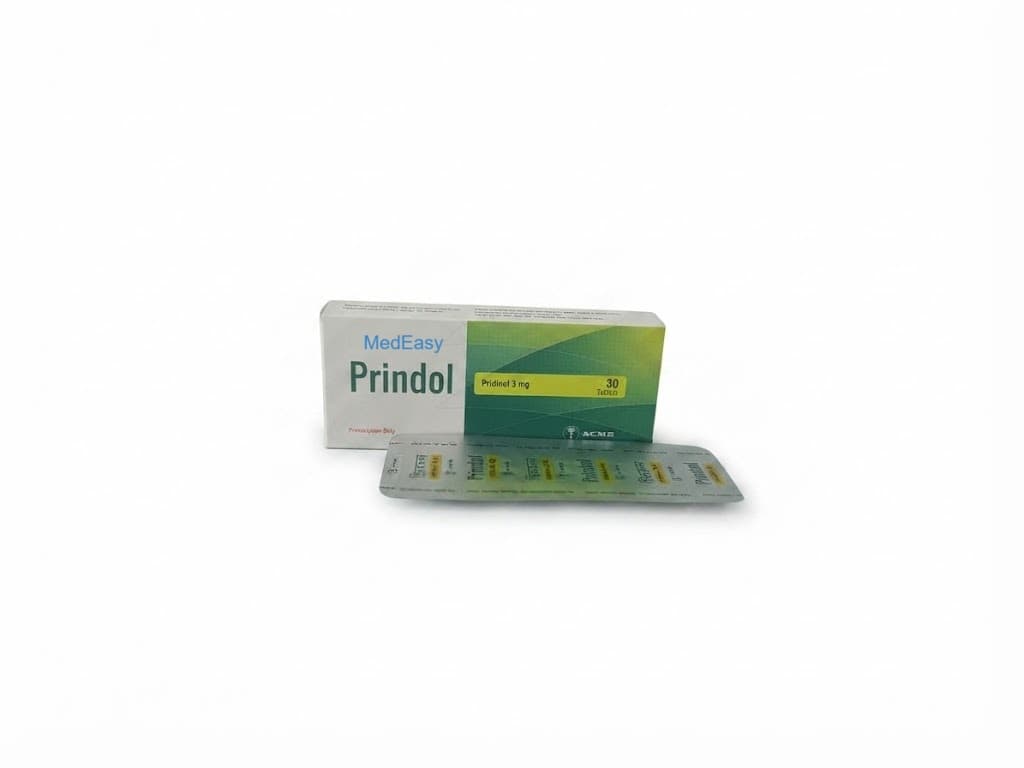

Medicine overview
Indications of Prindol 3 mg
Prindol 3 mg is a centrally acting muscle relaxant primarily used to relieve various types of muscle-related discomfort and spasms. It helps reduce muscle stiffness, improve mobility, and alleviate associated pain.
Therapeutic Uses
- Muscle Spasms (Central & Peripheral):
Effective in managing both centrally and peripherally induced muscle spasms, helping to relax tense muscles and restore normal movement. - Neck Spasm (Torticollis):
Indicated for the treatment of torticollis, a condition characterized by abnormal neck positioning and stiffness, often accompanied by pain and limited range of motion. - Low Back Pain (Lumbago):
Provides symptomatic relief in patients suffering from lower back pain caused by muscle strain, poor posture, or musculoskeletal disorders. - General Muscle Pain (Myalgia):
Useful in alleviating generalized muscle pain resulting from overuse, injury, or inflammatory conditions.
Additional Clinical Benefits (Expanded)
- Helps improve functional mobility in patients with musculoskeletal conditions
- May be used as part of a comprehensive pain management plan, including physiotherapy
- Reduces muscle rigidity and discomfort associated with acute or chronic conditions
Summary
Prindol 3 mg is widely used for the symptomatic treatment of muscle tension, spasms, and related pain conditions, making it a valuable option in managing musculoskeletal disorders affecting daily activities and quality of life.
Theropeutic Class
Centrally acting Skeletal Muscle Relaxants
Pharmacology
Prindol 3 mg is a centrally acting muscle relaxant with additional anticholinergic (antimuscarinic) properties. It is primarily used for the symptomatic relief of muscle spasms and certain neurological conditions.
Mechanism of Action
- Central Muscle Relaxant Effect:
Pridinol acts on the central nervous system (CNS), particularly at the level of the spinal cord and brain, to reduce excessive muscle tone and involuntary contractions. This leads to relaxation of skeletal muscles and relief from spasm-related pain. - Antimuscarinic Activity:
It exhibits anticholinergic effects by blocking muscarinic receptors, thereby inhibiting the action of acetylcholine. This contributes to its ability to reduce muscle rigidity and control abnormal movements.
Pharmacological Effects
- Reduction of Muscle Spasm:
Decreases involuntary muscle contractions and stiffness, improving mobility and comfort. - Relief of Pain Associated with Spasm:
By relaxing muscles, it indirectly alleviates pain caused by sustained contraction. - Anti-Parkinsonian Action:
When used as its hydrochloride salt, Pridinol demonstrates effectiveness in managing symptoms of parkinsonism such as rigidity and tremors due to its antimuscarinic properties.
Clinical Significance
- Useful in both musculoskeletal disorders and certain neurological conditions
- Helps restore motor function and flexibility
- Can be integrated into multimodal therapy, including physical rehabilitation and supportive care
Summary
Prindol 3 mg works through central muscle relaxation and antimuscarinic mechanisms, making it effective in treating muscle spasms and offering additional benefits in conditions like parkinsonism.
Interaction of Prindol 3 mg
Contraindications
Prindol 3 mg should not be used in certain medical conditions due to the risk of serious adverse effects or worsening of underlying diseases.
Hypersensitivity
- Contraindicated in patients with known hypersensitivity to Prindol 3 mg or any of its excipients.
- Allergic reactions may include skin rash, itching, or more severe systemic reactions.
Ophthalmic Conditions
- Glaucoma (especially narrow-angle glaucoma):
Use is contraindicated due to its anticholinergic effects, which may increase intraocular pressure and worsen the condition.
Urogenital Disorders
- Prostate hypertrophy (benign prostatic hyperplasia):
May worsen urinary symptoms due to urinary retention risk. - Urinary retention syndrome:
Contraindicated because it can further impair bladder emptying.
Gastrointestinal Conditions
- Gastrointestinal obstruction:
Should not be used in patients with obstructive conditions of the gastrointestinal tract, as it may reduce motility and aggravate symptoms.
Cardiac Conditions
- Arrhythmia:
Contraindicated in patients with certain cardiac rhythm disorders due to potential anticholinergic-related cardiac effects.
Pregnancy
- First trimester of pregnancy:
Use is contraindicated during early pregnancy because of potential risks to fetal development.
Summary
Prindol 3 mg is contraindicated in patients with glaucoma, urinary retention disorders, gastrointestinal obstruction, arrhythmias, hypersensitivity to the drug, and during the first trimester of pregnancy. Careful screening is essential before initiating therapy to ensure patient safety.
Side Effects of Prindol 3 mg
Like other centrally acting muscle relaxants with anticholinergic properties, Prindol 3 mg may cause a range of side effects. These reactions vary in frequency and intensity depending on the individual patient.
Common Side Effects
The following adverse effects are reported more frequently:
- Abdominal pain or discomfort
- Dizziness
- Dry mouth
- Headache
- Nausea
- Hypotension (low blood pressure)
- Asthenia (general weakness or fatigue)
- Arrhythmias (irregular heart rhythm)
Rare Side Effects
Less commonly observed side effects include:
- Blurred or impaired vision
- Difficulty focusing (accommodation disturbance)
- Diarrhea
- Vomiting
- Hypersensitivity reactions, such as:
- Skin itching (pruritus)
- Redness of the skin (erythema)
- Swelling (edema)
- Shortness of breath (dyspnea)
- Impaired attention or concentration
- Coordination difficulties
- Altered taste sensation (dysgeusia)
- Psychological effects such as anxiety or depression
Clinical Considerations
- Many side effects are related to the anticholinergic activity of Prindol 3 mg.
- Elderly patients and those with cardiovascular or neurological conditions may be more sensitive to adverse effects.
- If severe or persistent symptoms occur, medical advice should be sought promptly.
Summary
Prindol 3 mg is generally well tolerated, but it may cause gastrointestinal discomfort, dry mouth, dizziness, and cardiovascular effects in some patients. Rarely, it can lead to visual, neurological, or hypersensitivity reactions requiring medical attention.
Pregnancy & Lactation
Prindol 3 mg should be used with caution during pregnancy and is generally not recommended during breastfeeding due to limited safety data.
Pregnancy
- First Trimester (First 3 Months):
Prindol 3 mg is contraindicated and should not be used during early pregnancy due to potential risks to fetal development. - Second and Third Trimesters:
Use may be considered only when clearly necessary, and should be done under strict medical supervision after careful evaluation of the risk–benefit ratio. - Treatment should be prescribed only if the expected therapeutic benefit justifies the potential risk to the fetus.
Lactation (Breastfeeding)
- There is no sufficient data regarding the excretion of Prindol 3 mg into human breast milk.
- Due to this lack of safety information, its use during breastfeeding is generally not recommended.
- If treatment is necessary, a physician should carefully decide whether to discontinue breastfeeding or avoid the medication.
Clinical Considerations
- Alternative safer options should be considered whenever possible during pregnancy and lactation.
- Patients should always consult a healthcare professional before initiating therapy in these conditions.
Summary
Prindol 3 mg should be avoided during the first trimester of pregnancy and used only when necessary in later stages under medical supervision. During breastfeeding, its use is not recommended due to insufficient safety data.
Precautions & Warnings
Prindol 3 mg should be used with caution in certain patient groups due to an increased risk of adverse effects, particularly related to its anticholinergic and central nervous system actions.
Elderly Patients
- Elderly individuals are more sensitive to the effects of Prindol 3 mg.
- There is an increased risk of dizziness, confusion, and falls, especially due to possible circulatory disturbances.
Patients with Liver or Kidney Impairment
- Use with caution in patients with hepatic or renal dysfunction.
- Impaired drug metabolism or excretion may lead to increased drug exposure and a higher risk of side effects.
Patients with Low Blood Pressure (Hypotension)
- Pridinol may increase the risk of circulatory problems such as dizziness or fainting (syncope) in hypotensive patients.
- Careful monitoring is recommended, particularly at the start of therapy or during dose adjustments.
Lactose Content Warning
- Prindol 3 mg tablets may contain lactose.
- Patients with rare hereditary conditions such as:
- Galactose intolerance
- Total lactase deficiency
- Glucose-galactose malabsorption
should not take this medicine.
Clinical Considerations
- Patients should be advised to rise slowly from sitting or lying positions to reduce the risk of dizziness.
- Caution is advised when operating machinery or driving due to possible effects on alertness and vision.
- Dose adjustment or close supervision may be required in high-risk groups.
Summary
Prindol 3 mg should be used cautiously in elderly patients, those with liver or kidney impairment, and individuals with hypotension due to increased risk of dizziness and fainting. It is also contraindicated in patients with specific hereditary lactose intolerance disorders.
Overdose Effects of Prindol 3 mg
Prindol 3 mg overdose is a medical emergency and requires immediate medical attention and supportive care. Due to its central nervous system and anticholinergic activity, excessive intake may lead to pronounced systemic effects.
Possible Effects of Overdose
- Severe anticholinergic symptoms, such as:
- Extreme dry mouth
- Blurred vision
- Flushing of the skin
- Dilated pupils
- Central nervous system effects, including:
- Confusion or agitation
- Drowsiness or dizziness
- Impaired coordination
- Cardiovascular effects, such as:
- Hypotension or circulatory instability
- Arrhythmias (irregular heartbeat)
- In severe cases, risk of syncope (fainting)
- Gastrointestinal disturbances, which may include:
- Nausea
- Vomiting
Management of Overdose
- Immediate medical intervention is required
- Treatment is mainly supportive and symptomatic, as no specific antidote is available
- Continuous monitoring of:
- Vital signs
- Cardiac function
- Neurological status
- Activated charcoal may be considered if ingestion is recent (under medical supervision)
Clinical Considerations
- Patients suspected of overdose should be managed in a hospital setting
- Careful observation is required until all symptoms resolve
- Management focuses on maintaining airway, breathing, circulation, and stabilizing the patient
Summary
Overdose of Prindol 3 mg can lead to significant anticholinergic, neurological, and cardiovascular effects. Prompt medical attention and supportive treatment are essential to ensure patient safety and recovery.
Storage Conditions
Keep below 30°C temperature, away from light & moisture. Keep out of the reach of children.
Frequently Asked Questions
What is Prindol 3 mg used for?
Prindol 3 mg is a centrally acting muscle relaxant primarily used to relieve various types of muscle-related discomfort and spasms. It helps reduce muscle stiffness, improve mobility, and alleviate associated pain. Therapeutic Uses Muscle Spasms (Central & Peripheral): Effective in managing both centrally and peripherally induced muscle spasms, helping to relax tense muscles and restore normal mov…
What are the side effects of Prindol 3 mg?
Like other centrally acting muscle relaxants with anticholinergic properties, Prindol 3 mg may cause a range of side effects. These reactions vary in frequency and intensity depending on the individual patient. Common Side Effects The following adverse effects are reported more frequently: Abdominal pain or discomfort Dizziness Dry mouth Headache Nausea Hypotension (low blood pressure) Asthenia (g…
Who should not take Prindol 3 mg?
Prindol 3 mg should not be used in certain medical conditions due to the risk of serious adverse effects or worsening of underlying diseases. Hypersensitivity Contraindicated in patients with known hypersensitivity to Prindol 3 mg or any of its excipients. Allergic reactions may include skin rash, itching, or more severe systemic reactions. Ophthalmic Conditions Glaucoma (especially narrow-angle g…
What precautions should be taken with Prindol 3 mg?
Prindol 3 mg should be used with caution in certain patient groups due to an increased risk of adverse effects, particularly related to its anticholinergic and central nervous system actions. Elderly Patients Elderly individuals are more sensitive to the effects of Prindol 3 mg. There is an increased risk of dizziness, confusion, and falls , especially due to possible circulatory disturbances. Pat…
Is Prindol 3 mg safe during pregnancy and breastfeeding?
Prindol 3 mg should be used with caution during pregnancy and is generally not recommended during breastfeeding due to limited safety data. Pregnancy First Trimester (First 3 Months): Prindol 3 mg is contraindicated and should not be used during early pregnancy due to potential risks to fetal development. Second and Third Trimesters: Use may be considered only when clearly necessary , and should b…
The information provided is accurate to our best practices, but it does not replace professional medical advice. We cannot guarantee its completeness or accuracy. The absence of specific information about a drug should not be seen as an endorsement. We are not responsible for any consequences resulting from this information, so consult a healthcare professional for any concerns or questions.