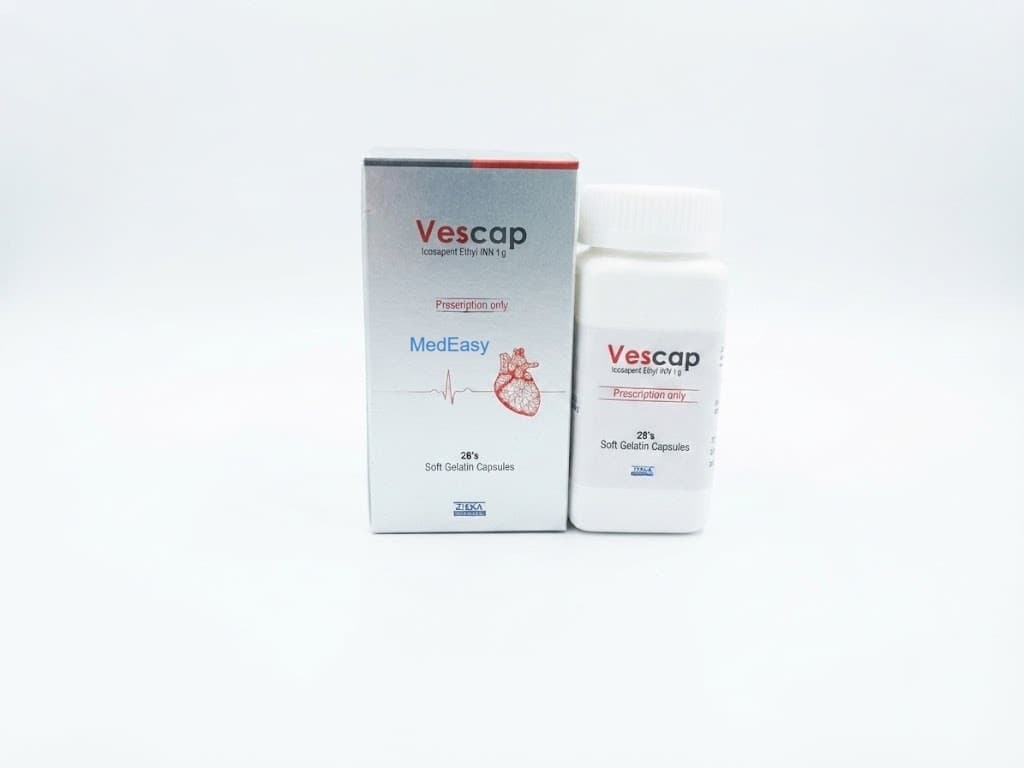

Medicine overview
Indications of Vescap 1 gm
Vescap 1 gm is an omega-3 fatty acid derivative used as an adjunct therapy to improve cardiovascular outcomes and reduce elevated triglyceride levels in appropriate adult patients. It is primarily prescribed alongside lifestyle modification and standard lipid-lowering therapy.
1. Cardiovascular Risk Reduction (Adjunct to Statin Therapy)
Vescap 1 gm is indicated as an add-on to maximally tolerated statin therapy to help reduce the risk of major cardiovascular events in adults with elevated triglycerides (≥150 mg/dL), including:
- Myocardial infarction (heart attack)
- Stroke
- Coronary revascularization procedures
- Hospitalization for unstable angina
Eligible Patient Groups:
- Adults with established cardiovascular disease (CVD), or
- Adults with diabetes mellitus plus at least two additional cardiovascular risk factors
This use focuses on reducing residual cardiovascular risk even when LDL cholesterol is controlled with statins.
2. Management of Severe Hypertriglyceridemia
Vescap 1 gm is also indicated as an adjunct to diet therapy for adults with:
- Severe hypertriglyceridemia (TG ≥500 mg/dL)
It helps reduce very high triglyceride levels, which are associated with increased risk of metabolic complications.
Limitations of Use
- The effect of Vescap 1 gm on reducing the risk of pancreatitis in patients with severe hypertriglyceridemia has not been established.
- It should not be used as a substitute for appropriate dietary control, glycemic management, or lipid-lowering therapy when indicated.
Clinical Summary
Vescap 1 gm is an important adjunct treatment for reducing cardiovascular risk in high-risk patients with elevated triglycerides and for managing severe hypertriglyceridemia alongside diet and statin therapy. Its primary benefit is cardiovascular risk reduction rather than direct treatment of pancreatitis prevention.
Theropeutic Class
Anti-anginal & lipid lowering drugs
Pharmacology
Vescap 1 gm is a highly purified ethyl ester of eicosapentaenoic acid (EPA), an omega-3 fatty acid that plays a key role in lipid metabolism and cardiovascular protection. It primarily works by reducing elevated triglyceride levels through multiple metabolic pathways.
Mechanism of Action
Vescap 1 gm is converted in the body to EPA, which exerts its lipid-lowering effects through several mechanisms:
- Reduction of Hepatic Triglyceride Production:
Decreases the synthesis and secretion of very low-density lipoprotein triglycerides (VLDL-TG) from the liver. - Enhanced Triglyceride Clearance:
Promotes the breakdown and removal of triglycerides from circulating VLDL particles, improving lipid clearance from the bloodstream.
Additional Metabolic Effects
EPA influences lipid metabolism through multiple complementary pathways:
- Increased β-oxidation:
Enhances fatty acid breakdown, reducing triglyceride availability for VLDL formation. - Inhibition of DGAT (Diacylglycerol Acyltransferase):
Suppresses triglyceride synthesis by inhibiting the enzyme involved in the final step of triglyceride formation. - Reduced Hepatic Lipogenesis:
Lowers the production of new fatty acids in the liver. - Increased Lipoprotein Lipase Activity:
Enhances enzymatic breakdown of circulating triglycerides, facilitating their clearance from plasma.
Pharmacological Effects
- Significant reduction in serum triglyceride levels
- Improvement in lipid particle metabolism
- Potential contribution to cardiovascular risk reduction beyond lipid lowering
Clinical Significance
- Used as an adjunct to statins for residual cardiovascular risk reduction
- Helps manage hypertriglyceridemia in high-risk patients
- Provides metabolic benefits through multiple lipid-regulating pathways rather than a single mechanism
Summary
Vescap 1 gm is an EPA-based omega-3 fatty acid derivative that lowers triglyceride levels by reducing hepatic VLDL production and enhancing triglyceride clearance. Its multifactorial action on lipid metabolism contributes to its role in cardiovascular risk reduction and hypertriglyceridemia management.
Dosage & Administration of Vescap 1 gm
Vescap 1 gm should be taken exactly as prescribed by a healthcare professional. It is typically used as part of a long-term lipid management and cardiovascular risk reduction plan, along with diet and statin therapy when indicated.
Recommended Adult Dose
- Total daily dose: 4 grams per day
- Administration schedule:
- Two 1 g capsules twice daily (total 4 capsules per day)
- With food:
- Capsules should be taken with meals to improve absorption and tolerability
Administration Instructions
- Swallow capsules whole with water
- Do not:
- Break
- Crush
- Dissolve
- Chew
Proper intake ensures consistent absorption and therapeutic effect.
Special Population Considerations
Renal Impairment
- Vescap 1 gm has not been specifically studied in patients with renal impairment.
- Use should be based on clinical judgment and regular monitoring if required.
Hepatic Impairment
- Liver function should be monitored during therapy.
- Periodic measurement of:
- ALT (Alanine aminotransferase)
- AST (Aspartate aminotransferase)
is recommended in patients with hepatic impairment.
Pediatric Use
- Safety and effectiveness in children and adolescents have not been established.
- Not routinely recommended for pediatric patients.
Geriatric Use
- Vescap 1 gm is considered safe and effective in elderly patients when used at recommended doses.
Clinical Considerations
- Should be used as an adjunct to diet and statin therapy where appropriate
- Long-term therapy may be required for sustained cardiovascular benefit
- Regular lipid monitoring is recommended to assess response
Summary
Vescap 1 gm is administered as 4 grams daily in two divided doses with food. It should be taken whole without alteration. While generally well tolerated, special monitoring may be required in patients with hepatic impairment, and its use in pediatric populations has not been established.
Interaction of Vescap 1 gm
Vescap 1 gm may interact with certain medications that affect blood clotting, potentially increasing the risk of bleeding. Careful monitoring is recommended when it is used alongside other therapies with similar effects.
Interaction with Anticoagulants and Antiplatelet Agents
- Concomitant use with anticoagulants (blood thinners) and antiplatelet drugs may increase the risk of bleeding.
- Published data on omega-3 fatty acids suggest a possible prolongation of bleeding time in some patients.
- Although the risk is generally low, it may become clinically significant in susceptible individuals.
Examples of Affected Drug Classes
Caution is advised when Vescap 1 gm is used with:
- Anticoagulants (e.g., warfarin and other blood thinners)
- Antiplatelet agents (e.g., aspirin, clopidogrel, or similar drugs)
Clinical Considerations
- Patients receiving combination therapy should be monitored for signs of bleeding, such as:
- Easy bruising
- Prolonged bleeding from cuts
- Nosebleeds
- Gastrointestinal bleeding symptoms
- Healthcare providers may consider:
- Regular clinical monitoring
- Periodic assessment of coagulation status when appropriate
- Dose adjustment of concomitant anticoagulant therapy if clinically indicated
Summary
Vescap 1 gm may increase bleeding risk when used with anticoagulants or antiplatelet medications due to its effect on platelet function and bleeding time. Careful monitoring is essential to ensure safe concurrent use and to minimize bleeding complications.
Contraindications
Vescap 1 gm should not be used in patients where there is a known risk of serious allergic reaction to the medicine or its ingredients.
Hypersensitivity
- Contraindicated in patients with known hypersensitivity to Vescap 1 gm or any of its components.
- Reactions may include:
- Allergic skin reactions
- Severe hypersensitivity responses such as anaphylaxis
Clinical Considerations
- A detailed patient history of allergies to omega-3 fatty acids or related products should be assessed before starting therapy.
- If signs of hypersensitivity occur during treatment, the medication should be discontinued immediately and appropriate medical care provided.
Summary
Vescap 1 gm is contraindicated in individuals with known hypersensitivity to the active substance or any of its excipients. Careful screening for allergy history is essential before initiating therapy.
Side Effects of Vescap 1 gm
Vescap 1 gm is generally well tolerated; however, like all medications, it may cause certain adverse effects. These can vary depending on the patient population and the clinical setting in which it is used.
Common Side Effects (Cardiovascular Outcomes Trials)
In patients treated for cardiovascular risk reduction, the following adverse reactions were commonly observed:
- Musculoskeletal pain
- Peripheral edema (swelling, usually in the limbs)
- Constipation
- Gout (elevated uric acid–related joint inflammation)
- Atrial fibrillation (irregular heart rhythm)
Common Side Effects (Hypertriglyceridemia Trials)
In clinical studies involving patients with high triglyceride levels, the most frequently reported side effects included:
- Arthralgia (joint pain)
- Oropharyngeal pain (throat discomfort)
Clinical Considerations
- Some side effects, such as atrial fibrillation and gout, may require clinical monitoring in high-risk patients.
- Musculoskeletal and gastrointestinal symptoms are generally mild to moderate in severity.
- Patients should report any new or worsening symptoms, especially palpitations, joint swelling, or persistent pain.
Summary
Vescap 1 gm is well tolerated overall but may be associated with musculoskeletal discomfort, edema, constipation, gout, atrial fibrillation, and mild throat or joint pain depending on the clinical context. Regular monitoring helps ensure safe long-term use.
Pregnancy & Lactation
Vescap 1 gm should be used during pregnancy and breastfeeding only after careful consideration of the potential benefits and risks, as safety data are limited in these populations.
Pregnancy
- Vescap 1 gm should be used during pregnancy only if the potential benefit justifies the potential risk to the fetus.
- There is limited clinical evidence regarding its safety in pregnant women.
- Treatment decisions should be made on a case-by-case basis under medical supervision, especially in high-risk cardiovascular or metabolic conditions.
Lactation (Breastfeeding)
- Studies have shown that omega-3 fatty acids, including EPA, can be present in human breast milk.
- Because of the potential for adverse effects in the nursing infant, caution is advised during breastfeeding.
-
A decision should be made to either:
- Discontinue breastfeeding, or
- Discontinue the medication,
taking into account the importance of treatment for the mother’s health.
Clinical Considerations
- The benefit of maternal cardiovascular protection should be weighed against potential infant exposure.
- If used during lactation, infants should be monitored for any unusual symptoms, although specific risks are not well established.
- Alternative therapies may be considered depending on clinical necessity.
Summary
Vescap 1 gm should only be used in pregnancy when clearly necessary, and breastfeeding decisions should balance maternal treatment needs against potential infant exposure. Due to limited safety data, careful medical supervision is essential in both conditions.
Precautions & Warnings
Vescap 1 gm should be used with caution in certain patient populations due to potential risks involving cardiac rhythm disturbances, bleeding tendency, and hypersensitivity reactions.
Atrial Fibrillation and Atrial Flutter
- Vescap 1 gm has been associated with an increased risk of atrial fibrillation or atrial flutter requiring hospitalization in clinical trials.
- The risk appears to be higher in patients with a previous history of atrial fibrillation or atrial flutter.
- Patients should be monitored for symptoms such as palpitations, irregular heartbeat, dizziness, or shortness of breath.
Allergic Reactions (Fish and Shellfish Allergy)
- Vescap 1 gm is derived from omega-3 fatty acids obtained from fish oil (EPA source).
- It is not fully established whether patients with fish or shellfish allergies have an increased risk of allergic reactions.
- Patients with known hypersensitivity should be advised to discontinue the medication and seek medical attention immediately if allergic symptoms occur.
Bleeding Risk
- Vescap 1 gm may be associated with an increased risk of bleeding.
- The risk is higher when used with antithrombotic or blood-thinning agents, such as:
- Aspirin
- Clopidogrel
- Warfarin
- Patients should be monitored for signs of bleeding, including:
- Easy bruising
- Nosebleeds
- Prolonged bleeding from cuts
- Gastrointestinal bleeding symptoms
Clinical Considerations
- Caution is advised in patients with a history of cardiac arrhythmias, especially atrial fibrillation.
- Careful monitoring is required when used with anticoagulants or antiplatelet drugs.
- Patients should be educated to report any signs of irregular heartbeat or unusual bleeding promptly.
Summary
Vescap 1 gm should be used cautiously in patients with a history of atrial fibrillation, fish or shellfish allergy, or those receiving antithrombotic therapy. Close monitoring is essential to reduce the risk of cardiac rhythm disturbances, hypersensitivity reactions, and bleeding complications.
Storage Conditions
Do not store above 25°C. Protect from light. Keep out of the reach of children.
Frequently Asked Questions
What is Vescap 1 gm used for?
Vescap 1 gm is an omega-3 fatty acid derivative used as an adjunct therapy to improve cardiovascular outcomes and reduce elevated triglyceride levels in appropriate adult patients. It is primarily prescribed alongside lifestyle modification and standard lipid-lowering therapy. 1. Cardiovascular Risk Reduction (Adjunct to Statin Therapy) Vescap 1 gm is indicated as an add-on to maximally tolerated …
What is the dosage of Vescap 1 gm?
Vescap 1 gm should be taken exactly as prescribed by a healthcare professional. It is typically used as part of a long-term lipid management and cardiovascular risk reduction plan, along with diet and statin therapy when indicated. Recommended Adult Dose Total daily dose: 4 grams per day Administration schedule: Two 1 g capsules twice daily (total 4 capsules per day) With food: Capsules should be …
What are the side effects of Vescap 1 gm?
Vescap 1 gm is generally well tolerated; however, like all medications, it may cause certain adverse effects. These can vary depending on the patient population and the clinical setting in which it is used. Common Side Effects (Cardiovascular Outcomes Trials) In patients treated for cardiovascular risk reduction, the following adverse reactions were commonly observed: Musculoskeletal pain Peripher…
Who should not take Vescap 1 gm?
Vescap 1 gm should not be used in patients where there is a known risk of serious allergic reaction to the medicine or its ingredients. Hypersensitivity Contraindicated in patients with known hypersensitivity to Vescap 1 gm or any of its components. Reactions may include: Allergic skin reactions Severe hypersensitivity responses such as anaphylaxis Clinical Considerations A detailed patient histor…
What precautions should be taken with Vescap 1 gm?
Vescap 1 gm should be used with caution in certain patient populations due to potential risks involving cardiac rhythm disturbances, bleeding tendency, and hypersensitivity reactions. Atrial Fibrillation and Atrial Flutter Vescap 1 gm has been associated with an increased risk of atrial fibrillation or atrial flutter requiring hospitalization in clinical trials. The risk appears to be higher in pa…
Is Vescap 1 gm safe during pregnancy and breastfeeding?
Vescap 1 gm should be used during pregnancy and breastfeeding only after careful consideration of the potential benefits and risks, as safety data are limited in these populations. Pregnancy Vescap 1 gm should be used during pregnancy only if the potential benefit justifies the potential risk to the fetus . There is limited clinical evidence regarding its safety in pregnant women. Treatment decisi…
The information provided is accurate to our best practices, but it does not replace professional medical advice. We cannot guarantee its completeness or accuracy. The absence of specific information about a drug should not be seen as an endorsement. We are not responsible for any consequences resulting from this information, so consult a healthcare professional for any concerns or questions.