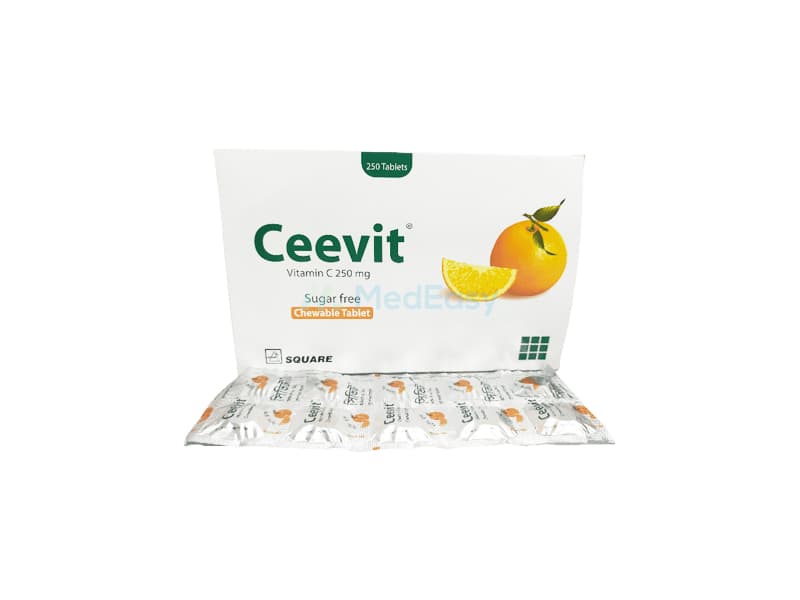
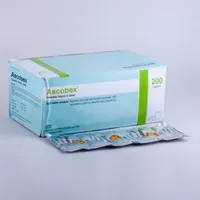
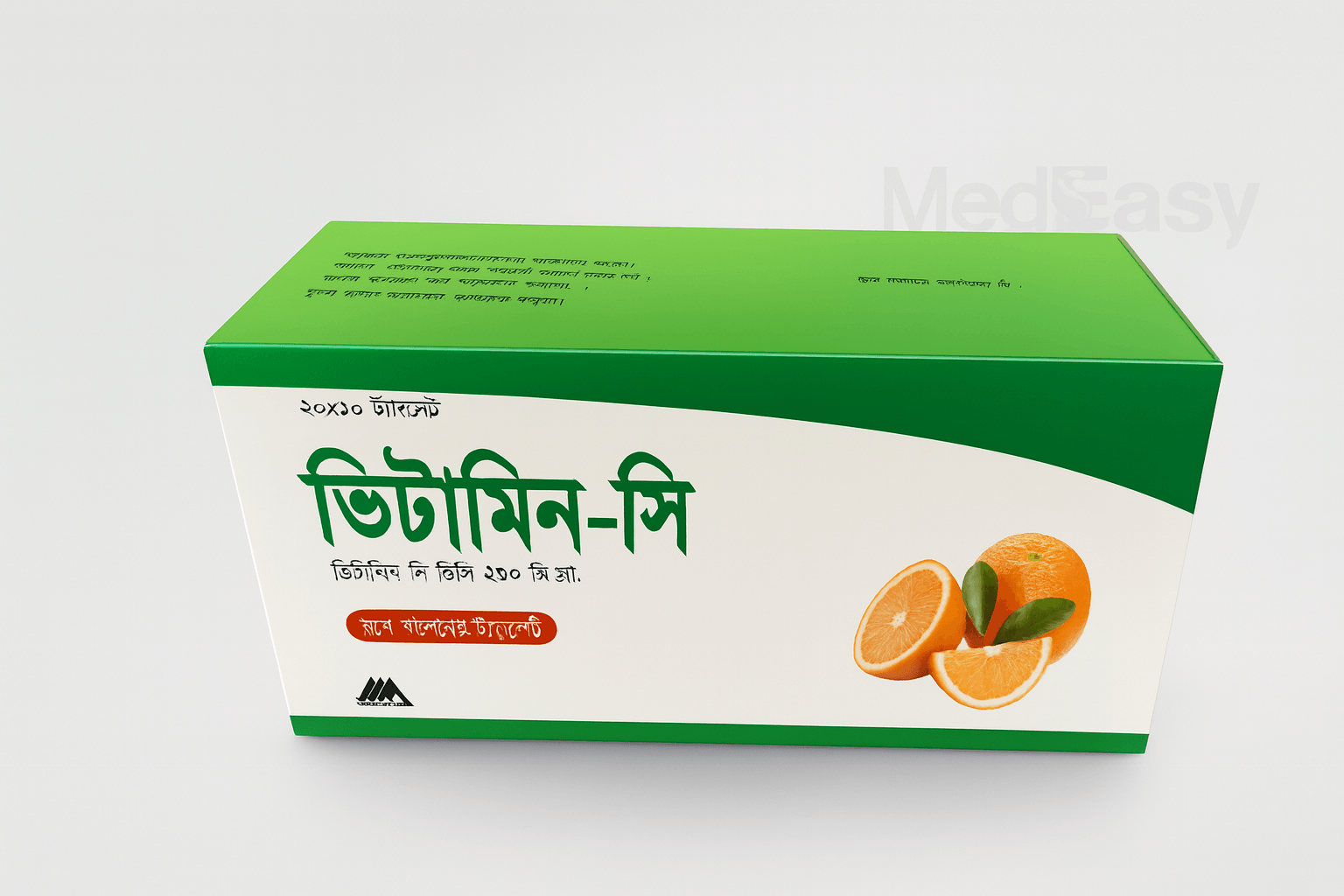
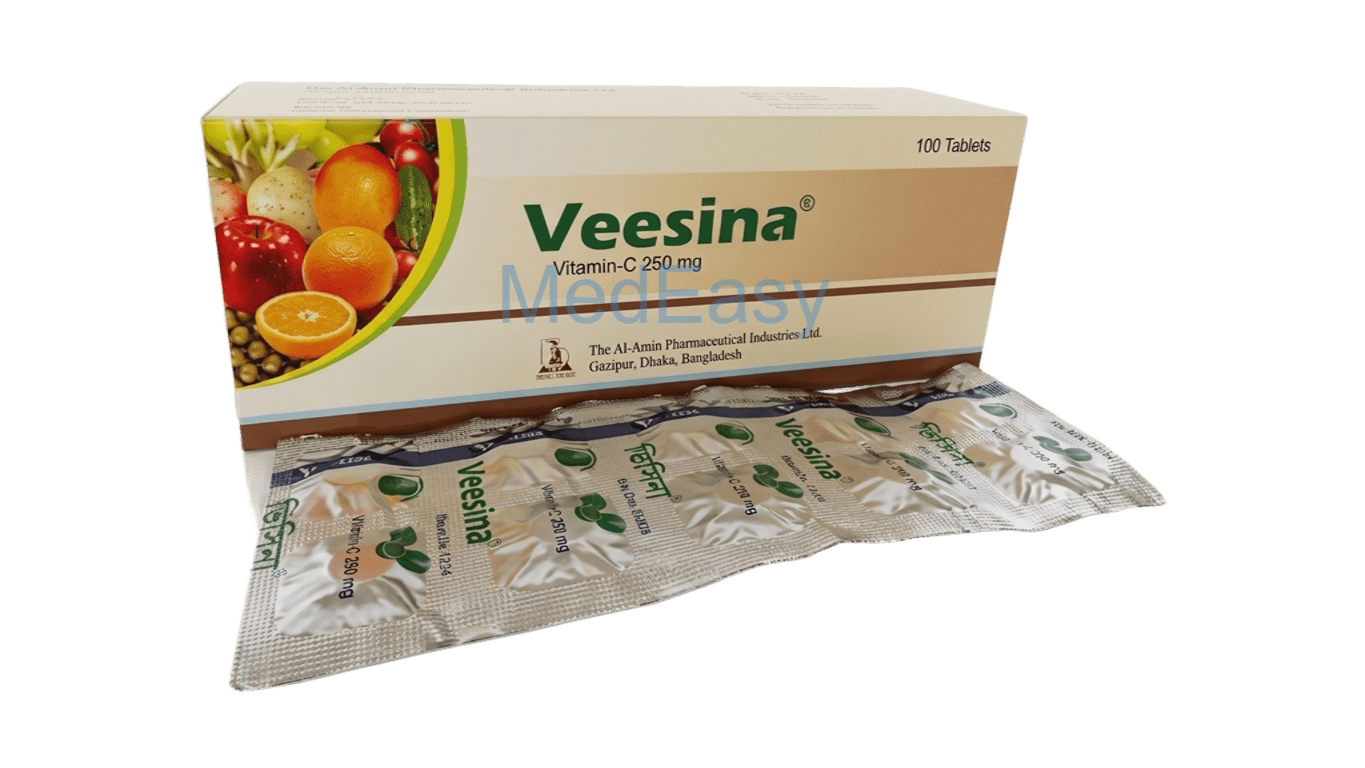
Ceevit 250 mg Chewable Tablet is available on MedEasy for ৳17.67 per 10's Strip, with home delivery anywhere in Bangladesh. It is manufactured by Square Pharmaceuticals PLC. Its generic name is Vitamin C [Ascorbic acid].
Pack sizes
10's Strip, 250's Pack
Prescription
Not required (over-the-counter).
Delivery
Home delivery across Bangladesh. Same-day delivery in Dhaka, Chattogram, Sylhet and Bogura city areas; 2-3 days elsewhere.
Payment
Cash on delivery, bKash, cards and mobile banking.
Prevention and treatment of Ceevit deficiency (scurvy)
Dietary supplementation when intake from food is inadequate, including in smokers (who have higher requirements), people with very limited or restrictive diets, and certain malabsorption conditions
Guideline-Supported / Adjunct Uses
As an adjunct to enhance absorption of non-heme dietary or supplemental iron in the management of iron-deficiency anemia
As part of the AREDS/AREDS2 antioxidant-vitamin combination, used under an ophthalmologist's guidance to slow progression of intermediate-to-advanced age-related macular degeneration in high-risk patients (the evidence supports the antioxidant combination as a whole, not Ceevit alone)
Popular but Unproven or Limited-Evidence Uses
Prevention or treatment of the common cold: regular supplementation with Ceevit may modestly shorten cold duration and severity in the general population, and may reduce incidence specifically in people under brief periods of extreme physical exertion or cold exposure (e.g., marathon runners, soldiers). It does not reliably prevent colds in the general population, and starting Ceevit after symptoms begin has not been shown to help
General "immune boosting," prevention of cardiovascular disease, or cancer prevention: current randomized-trial evidence does not support routine Ceevit supplementation for these purposes in people who are not deficient
Composition
Active ingredient: Vitamin C [Ascorbic acid]. Locally marketed strengths of Vitamin C [Ascorbic acid] include 250 mg and 500 mg chewable tablets, 500 mg oral sachets, 1000 mg effervescent tablets, 100 mg/5 mL syrup, and 500 mg/5 mL injection.
Description
Ceevit is an essential, water-soluble vitamin that the body needs for normal growth, tissue repair, wound healing, and immune and antioxidant function, but cannot make on its own. Ceevit is used to prevent and treat Ceevit deficiency (scurvy) and as a dietary supplement when intake from food is insufficient. Ceevit also helps the body absorb iron from food and supplements. It is available in several oral forms (tablets, chewable tablets, effervescent tablets, syrup) and as an injection used under medical supervision. As with any supplement, Ceevit should be taken at doses appropriate to individual needs, since very high doses carry the risks described later in this leaflet.
Therapeutic Class
Vitamin / Antioxidant supplement
Pharmacology
Vitamin C [Ascorbic acid] is absorbed from the small intestine mainly by active, sodium-dependent transport. Absorption is efficient at usual dietary and supplemental doses but becomes less efficient at very large single oral doses, and oral dosing produces substantially lower blood levels than intravenous administration. Once absorbed, Vitamin C [Ascorbic acid] is distributed throughout body tissues and fluids, reaching higher concentrations in tissues such as the eyes, adrenal glands, and white blood cells than in plasma. It is metabolized to dehydroascorbic acid and further breakdown products, including oxalate. Once tissue stores are saturated, additional absorbed Vitamin C [Ascorbic acid] and its metabolites are excreted primarily in the urine, and Vitamin C [Ascorbic acid] is also removed by hemodialysis.
Dosage & Administration of Ceevit
The dose of Ceevit should always be determined by a qualified healthcare professional or based on approved product/dietary labeling, taking into account the specific indication, the person's age, and individual health status. Requirements and appropriate doses of Ceevit differ substantially between routine dietary supplementation and the treatment of diagnosed Ceevit deficiency (scurvy); the figures below are general reference ranges and are not a universal prescription for every person.
Administration of Ceevit
Standard tablets: swallow whole with a full glass of water; may be taken with or without food
Chewable tablets: chew thoroughly before swallowing
Effervescent tablets: dissolve completely in a glass of water (or as directed on the label) and drink once the fizzing has stopped
Syrup: measure the dose using the cup/spoon provided rather than an average household spoon
If Ceevit causes stomach upset, take it with food or a meal
Very large single doses of Ceevit are absorbed less efficiently; if a healthcare professional prescribes a high daily dose, they may advise splitting it into two or more smaller doses through the day
Take Ceevit at approximately the same time each day for consistent supplementation
Do not exceed the dose of Ceevit recommended by a healthcare professional or stated on the product label
Interaction of Ceevit
Iron supplements or iron-rich foods: Ceevit enhances absorption of non-heme dietary and supplemental iron by reducing ferric (Fe3+) iron to the more absorbable ferrous (Fe2+) form; this is sometimes used intentionally to treat iron-deficiency anemia, but may be unwanted in iron-overload conditions (see Use in Special Populations)
Warfarin: case reports describe reduced anticoagulant effect (lower INR) with high-dose Ceevit; this is classified as a minor interaction, but patients on warfarin should keep their Ceevit intake consistent and inform their doctor before starting, stopping, or changing the dose
Chemotherapy and radiation therapy: high-dose Ceevit, particularly given intravenously, may theoretically protect tumor cells from the oxidative damage caused by certain chemotherapeutic agents and radiotherapy; patients undergoing cancer treatment should consult their oncologist before taking Ceevit or other antioxidant supplements, especially at high doses
Aluminum-containing antacids or phosphate binders: Ceevit increases intestinal absorption of aluminum, which can accumulate to harmful levels in people with kidney impairment; people with renal disease should avoid aluminum-containing products together with high-dose Ceevit unless a doctor advises otherwise
Deferoxamine (iron-chelation therapy): Ceevit increases iron mobilization during deferoxamine treatment; this combination is used under specialist supervision (for example, in thalassemia) because inappropriate dosing has been linked to cardiac stress
Niacin–simvastatin combination therapy: Ceevit taken together with other antioxidants may blunt the HDL-cholesterol-raising effect of combined niacin–simvastatin therapy
Contraindications
Vitamin C [Ascorbic acid] is contraindicated in individuals with known hypersensitivity to Vitamin C [Ascorbic acid] or to any excipient in the specific formulation being used.
Side Effects of Ceevit
Common Side Effects
At usual recommended doses, Ceevit is generally well tolerated. At higher doses, it may cause nausea, abdominal cramps, diarrhea, bloating or flatulence, and heartburn.
Serious Side Effects – Seek Medical Attention
Kidney stones with long-term high-dose use (see Precautions and Warnings for details)
Acute hemolysis (breakdown of red blood cells) in people with G6PD deficiency who take high doses of Ceevit (see Precautions and Warnings for details)
Signs of an allergic reaction — rash, itching, swelling, severe dizziness, or difficulty breathing
If any of these occur, stop Ceevit and contact a doctor promptly, or seek emergency care for a severe allergic reaction.
Pregnancy & Lactation
Pregnancy
Ceevit is an essential nutrient and is needed in slightly higher amounts during pregnancy (RDA of 80 mg/day for ages 14–18 years and 85 mg/day for ages 19–50 years); supplementation at these RDA levels is generally considered appropriate when dietary intake is insufficient. However, very high doses (several grams per day) are not recommended during pregnancy — case reports describe a possible association between very high maternal intake and scurvy-like symptoms in the newborn shortly after birth, thought to reflect a rebound effect once the infant's higher in-utero exposure stops. Pregnant women should stay within RDA/UL levels for Ceevit unless a doctor specifically advises otherwise, and should consult their doctor before starting any Ceevit supplement.
Breastfeeding
Ceevit is needed in higher amounts during breastfeeding (RDA of 115 mg/day for ages 14–18 years and 120 mg/day for ages 19–50 years) and is transferred into breast milk; supplementation at RDA levels is generally considered compatible with breastfeeding. Breastfeeding women should avoid high-dose Ceevit supplementation beyond the Tolerable Upper Intake Level unless a doctor directs otherwise, and should consult their doctor before use.
Precautions & Warnings
Kidney stone risk with high-dose, long-term use: regularly taking Ceevit well above the RDA, particularly at gram-level doses, can increase urinary oxalate and the risk of calcium oxalate kidney stones; people with a personal or family history of kidney stones, hyperoxaluria, or renal impairment should avoid high-dose Ceevit unless specifically advised and monitored by a doctor
G6PD deficiency: high doses of Ceevit, especially given intravenously, have been reported to trigger acute hemolysis in people with glucose-6-phosphate dehydrogenase (G6PD) deficiency; people with known G6PD deficiency should limit themselves to standard dietary-supplement doses and tell their doctor about this condition before considering high-dose use
Iron-overload conditions (e.g., hemochromatosis, thalassemia): Ceevit increases dietary iron absorption and can worsen iron overload; people with hemochromatosis or other iron-overload disorders should avoid high-dose Ceevit unless a doctor directs otherwise
Renal impairment, including hemodialysis: people with significant kidney impairment may need individualized dosing of Ceevit, and high-dose use in this group can also increase absorption of aluminum from aluminum-containing medicines (see Interactions)
Interference with laboratory tests: high-dose Ceevit can cause false results on certain laboratory tests, such as some urine glucose tests and stool occult-blood tests; tell the laboratory or your doctor if you are taking high-dose Ceevit before testing
Not a substitute for medical treatment: popular claims that Ceevit prevents or cures the common cold, COVID-19, or other infections are not well supported by strong clinical evidence at a population level; Ceevit should not replace medically indicated treatment or vaccination
Overdose Effects of Ceevit
Ceevit has low acute toxicity because it is water-soluble and excess amounts are generally eliminated in urine. Very high oral doses can cause gastrointestinal symptoms such as nausea, vomiting, diarrhea, and abdominal cramps; long-term excessive intake carries the risks described in Precautions and Warnings (kidney stones, and hemolysis in people with G6PD deficiency). No single universal toxic threshold dose has been established for Ceevit. If someone has taken a large amount of Ceevit beyond the recommended dose, do not induce vomiting unless a doctor or poison-control service specifically directs it, and contact a doctor or your local emergency/poison-control service promptly, especially if the amount taken was large or the person is a child.
Storage Conditions
Store Ceevit below 30°C in a dry place, protected from light and moisture, and out of the reach of children. Always follow the specific storage instructions on the product label or pack, since these can vary between formulations (tablet, syrup, effervescent tablet, or injection).
Use In Special Populations
Children: requirements for Ceevit vary by age (see Pediatric Uses); use age-appropriate dosing and consult a pediatrician for suspected deficiency
Elderly: the RDA for Ceevit is generally the same as for other adults, and no specific dose reduction is required for age alone, though age-related dietary insufficiency is a recognized risk factor for deficiency
Renal impairment: see Precautions and Warnings; dose individualization is needed, particularly in hemodialysis patients, and caution is required with concurrent aluminum-containing medicines
Hepatic impairment: no specific dose adjustment for Ceevit is well established from available sources; standard supplementation doses are generally used, and a doctor should be consulted before any high-dose use
G6PD deficiency: see Precautions and Warnings; avoid high-dose or intravenous use of Ceevit
History of kidney stones or hyperoxaluria: see Precautions and Warnings; avoid high-dose, prolonged use of Ceevit
Hemochromatosis or other iron-overload disorders: avoid high-dose Ceevit, since it increases iron absorption
Pregnancy and breastfeeding: see Pregnancy and Lactation
Duration Of Treatment
Dietary supplementation: Ceevit taken to meet daily nutritional needs can generally be continued long term at RDA-level doses when dietary intake is insufficient
Scurvy treatment: therapeutic doses of Ceevit are typically continued for about 1 to 3 months, or until clinical signs and symptoms fully resolve, then reduced to a maintenance/dietary level as advised by the prescriber
Common-cold or other short-term supportive use: typically limited to the period of increased need (for example, during a cold, or a short period of intense physical exertion) rather than indefinite high-dose use
Any high-dose or long-duration use of Ceevit beyond RDA levels should be reviewed periodically by a healthcare professional, given the risks described in Precautions and Warnings
Vitamin C [Ascorbic acid] is a water-soluble essential nutrient and reducing agent (antioxidant) that the body cannot synthesize on its own. It donates electrons to neutralize reactive oxygen species, protecting cells, lipids, proteins, and DNA from oxidative damage, and helps regenerate other antioxidants such as vitamin E. Vitamin C [Ascorbic acid] also acts as an essential cofactor for a family of enzymes, including those required for collagen synthesis (prolyl and lysyl hydroxylases), carnitine synthesis, and the synthesis of certain neurotransmitters such as norepinephrine, and it enhances intestinal absorption of non-heme dietary iron by reducing ferric iron to the ferrous form.
Pediatric Uses
Ceevit is required for normal growth, tissue repair, and health in children, and the RDA increases with age: approximately 15 mg/day for ages 1–3 years, 25 mg/day for ages 4–8 years, 45 mg/day for ages 9–13 years, and 65–75 mg/day for ages 14–18 years (75 mg for males, 65 mg for females). For treatment of confirmed Ceevit deficiency (scurvy) in children, a pediatrician may prescribe Ceevit at doses up to about 300 mg/day, continued until symptoms resolve. Infants fed exclusively boiled or evaporated milk (which destroys Ceevit) are at particular risk of deficiency and may need Ceevit supplementation as advised by a pediatrician. High-dose supplementation of Ceevit beyond the age-specific Tolerable Upper Intake Level is not recommended in children without medical supervision.
Frequently Asked Questions
What is Ceevit 250 mg Chewable Tablet used for?
Ceevit 250 mg Chewable Tablet is used to prevent and treat Ceevit 250 mg Chewable Tablet deficiency (scurvy), as a dietary supplement when intake from food is insufficient, and as an adjunct to help the body absorb dietary or supplemental iron. It is also popularly, though not conclusively, used to try to shorten the duration of common colds. See Indications for full details.
How much Ceevit 250 mg Chewable Tablet should I take per day?
The right amount of Ceevit 250 mg Chewable Tablet depends on age, sex, and the reason it is being taken. For general dietary supplementation, the usual recommended intake for adults is about 90 mg/day for men and 75 mg/day for women (higher in pregnancy, breastfeeding, and for smokers), while treatment of diagnosed deficiency uses higher, doctor-directed doses of Ceevit 250 mg Chewable Tablet. See Dosage for a full reference table, and always follow the advice of a healthcare professional or the product label.
Can Ceevit 250 mg Chewable Tablet cure or prevent the common cold?
Not reliably. Regular use of Ceevit 250 mg Chewable Tablet may modestly shorten the duration and severity of colds in the general population, and may reduce how often colds occur specifically in people under brief periods of intense physical exertion or cold exposure. It does not prevent colds in most people, and starting Ceevit 250 mg Chewable Tablet after symptoms have already begun has not been shown to help.
Is Ceevit 250 mg Chewable Tablet safe during pregnancy?
Ceevit 250 mg Chewable Tablet is generally needed and considered appropriate during pregnancy at RDA levels (80–85 mg/day, depending on age), and low dietary intake should be corrected. Very high doses (several grams per day) of Ceevit 250 mg Chewable Tablet are not recommended in pregnancy and have been linked in case reports to scurvy-like symptoms in the newborn after birth. Pregnant women should consult their doctor before taking Ceevit 250 mg Chewable Tablet supplements above dietary/RDA amounts.
Can children take Ceevit 250 mg Chewable Tablet?
Yes. Ceevit 250 mg Chewable Tablet is a normal part of a child's nutrition, with age-specific recommended intakes, and a pediatrician may prescribe higher, supervised doses of Ceevit 250 mg Chewable Tablet to treat confirmed Ceevit 250 mg Chewable Tablet deficiency in a child. See Pediatric Uses for details, and avoid high-dose supplementation in children without medical supervision.
Does Ceevit 250 mg Chewable Tablet interact with any medicines?
Yes, Ceevit 250 mg Chewable Tablet can interact with certain medicines. Notable examples include enhanced absorption of iron supplements, a possible reduction in the anticoagulant effect of warfarin at high doses, a theoretical concern with chemotherapy and radiation therapy, and increased absorption of aluminum from aluminum-containing antacids or phosphate binders. See Interaction for full details, and tell your doctor or pharmacist about all medicines you take before starting Ceevit 250 mg Chewable Tablet.
What are the side effects of taking too much Ceevit 250 mg Chewable Tablet?
Taking more Ceevit 250 mg Chewable Tablet than recommended can cause stomach upset, including nausea, cramping, and diarrhea. Long-term high-dose use is also linked to an increased risk of kidney stones, and in people with G6PD deficiency, high doses (especially intravenous) of Ceevit 250 mg Chewable Tablet have been reported to trigger acute breakdown of red blood cells. See Side Effects and Precautions and Warnings for full details.
Can Ceevit 250 mg Chewable Tablet be taken with milk?
There is no well-documented, clinically significant interaction between Ceevit 250 mg Chewable Tablet and milk. Ceevit 250 mg Chewable Tablet can generally be taken with or without food, including with milk, and taking it with food or a milky drink may help reduce mild stomach upset in some people.
What should I do if I miss a dose of Ceevit 250 mg Chewable Tablet?
If a dose of Ceevit 250 mg Chewable Tablet is missed, take it as soon as it is remembered unless it is almost time for the next dose, in which case the missed dose should be skipped rather than doubling up. Since Ceevit 250 mg Chewable Tablet is usually taken for ongoing nutritional support rather than as a strict fixed-interval medicine, an occasional missed dose is not typically a cause for concern, but consult a doctor or pharmacist if unsure.
Disclaimer
The information provided is accurate to the best of our knowledge, but it does not replace professional medical advice. We cannot guarantee its completeness or accuracy, and the absence of specific information about a drug should not be taken as an endorsement. We are not responsible for any consequences arising from this information, so please consult a healthcare professional for any concerns or questions.